When Donald and Melania Trump landed at Windsor for their state visit,
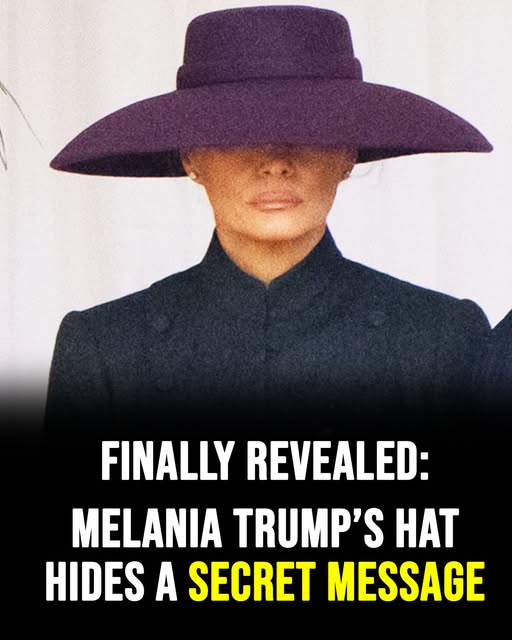
the pageantry was familiar—rotors, motorcades, handshakes with Prince William and Catherine—but the First Lady’s hat quickly stole the spotlight. In Britain, millinery is a language, and Melania’s wide-brimmed purple hat paired with a tailored Dior suit was read as deliberate, not decorative.
Purple carried weight on both sides of the Atlantic: royal in Britain, bipartisan in America. Donald Trump echoed the shade with his tie, creating a subtle visual duet. Some saw the coordination as a gesture of unity; others, as a simple stylistic harmony against the backdrop of scarlet uniforms and centuries of ritual. Either way, the optics were striking.
The silhouette of the brim—dipping low enough to obscure her eyes—added intrigue. Stylists debated whether it signaled deference, modesty, or quiet assertion. Hats in Britain punctuate public life with meaning: celebratory, reverent, or restrained. Melania’s choice placed her firmly in that tradition, reminding onlookers that clothes often speak more clearly than speeches at such occasions.
As the day moved from guard reviews to wreath-laying and an evening state banquet, the hat’s work was done, but its image lingered online. Praise, criticism, and speculation swirled, but all agreed it became one of the visit’s defining visuals. In the choreography of statecraft, Melania’s hat was a whisper that carried far, reminding us that in diplomacy, fabric and color can be as eloquent as words.