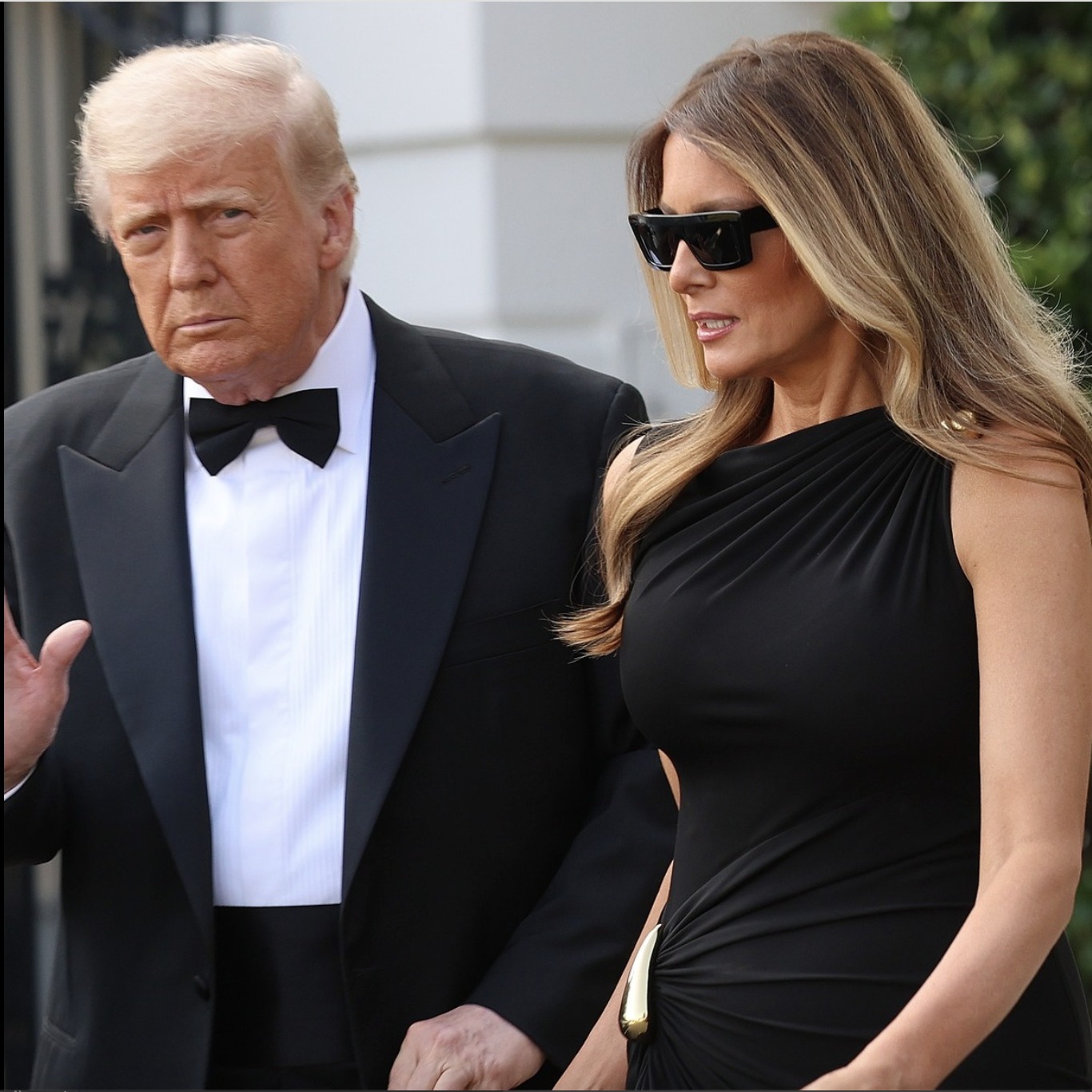
President Donald Trump and First Lady
]Melania Trump’s attendance at Les Misérables on June 11 at the Kennedy Center stirred both spectacle and controversy. It marked Trump’s first return to the venue since reshaping its leadership and programming, and the reception was anything but quiet. As the couple appeared in the presidential box, applause clashed with boos, chants, and shouts—some patriotic, others profane. Trump, unfazed, flashed a familiar three-pump fist to his supporters. The polarized reaction reflected not just opinions of the president but also the enduring tension between politics and art.
Even before curtain time, the evening had been charged with cultural undercurrents. Reports suggested several members of the Les Misérables cast opted out of the performance in protest, while drag performers filled seats donated by critical patrons—a symbolic counterpoint to Trump’s earlier pledge to eliminate “woke” programming from the Kennedy Center’s calendar. The juxtaposition was sharp: a musical about rebellion and social justice attended by a president whose administration, that same week, deployed federal forces to quell protests in Los Angeles. Critics called the timing “ironically theatrical.”
Trump’s appearance also doubled as a fundraising showcase. He told reporters the night brought in more than $10 million for the Center, calling it “incredible.” His allies framed the event as proof of renewed energy at the institution following his conservative leadership overhaul, while Kennedy Center officials maintained that any drop in subscriptions reflected scheduling changes rather than political backlash. Still, many in the arts community warned that the new direction risked narrowing one of the nation’s most prominent cultural spaces.
Outside the policy debates, the evening spawned its own social-media sideshow. A photo of Trump and Melania leaving the venue—his hand seemingly grasping only her thumb—ignited online commentary and memes, continuing the internet’s fascination with their body language. In the end, the night served as a kind of Rorschach test: to supporters, a triumphant return to a reclaimed stage; to critics, a tone-deaf performance in an era of unrest. Like Les Misérables itself, it left audiences divided—but undeniably engaged.