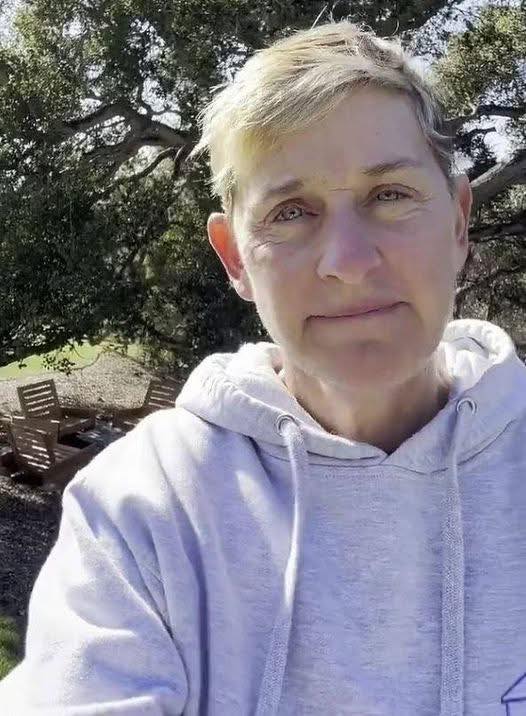
As Ellen DeGeneres wrapped up her long-running talk show and stepped away from the daily spotlight, many fans assumed her
life had simply shifted toward new passions, like her work in animal conservation and the Ellen DeGeneres Campus of the Dian Fossey Gorilla Fund in Rwanda. But behind the scenes, she was dealing with something far more personal — and surprisingly painful. When Ellen contracted cvd in December 2020, she followed all the protocols and shared her diagnosis openly with fans. A week later, she announced she had fully recovered, but there was one part of her experience that caught her completely off guard: the excruciating back pain that came with it.
Appearing on Jimmy Kimmel Live! in April 2021, Ellen opened up about what it had really felt like. “I feel fantastic,” she told Kimmel, before adding, “What they don’t tell you is that you will have severe back pain. I had no idea it was a symptom until I spoke with a few other people.” At the time she got sick, back pain wasn’t something you’d hear listed among the classic cvdsymptoms, like fever, cough, or loss of taste and smell. The CDC did mention “muscle or body aches” in general, but sharp or severe back pain wasn’t widely talked about, which left people like Ellen shocked by how intense and unexpected it could be.
As the pandemic went on and more people shared their experiences, back, shoulder, and joint pain began to surface more frequently in patient reports. Health services like the NHS pointed out that many people already had underlying aches and pains, and illness — combined with long periods of inactivity — could easily make things worse. Being sick often means less movement, more time in bed or on the couch, and weaker muscles over time, all of which can trigger or amplify back pain. Add to that the massive shift to working from home, often in poorly set-up spaces like couches or kitchen chairs, and it’s no surprise that back pain became more common, even among people who never had issues before.
Studies eventually confirmed what many were feeling. Research in Malta, for example, found that while around 30% of people reported chronic back pain before the pandemic, nearly half did afterward — and some were experiencing it for the first time. Still, doctors remind us that back pain alone doesn’t automatically mean cvd19. It can be caused by everything from poor posture to the flu, pneumonia, or everyday strain. Ellen’s story, and that of many others, highlights just how varied and surprising cvd symptoms can be — and how important it is to listen to your body, seek medical advice when something feels “off,” and remember that even celebrities can be blindsided by the same aches, fears, and frustrations as the rest of us.