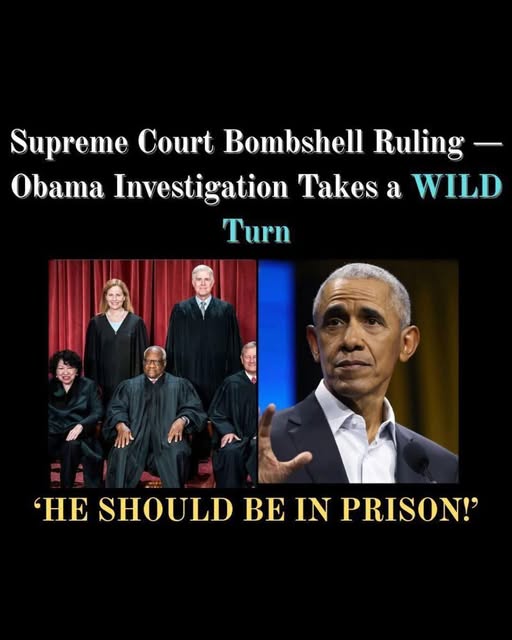
The warning lights are flashing red. As Donald Trump hints at pursuing Barack Obama, a legal irony snaps into focus:
the Supreme Court ruling Trump once praised may now stop him cold. What sounded like political thunder runs headlong into constitutional concrete.
The Court’s decision in Trump v. United States drew a wide shield around “official acts,” insulating core presidential decisions—intelligence, investigations, national security—from criminal prosecution. That protection doesn’t care who’s accused. In trying to fortify himself, Trump helped build the strongest legal barrier Obama could have.
That doesn’t mean the conflict disappears. Tulsi Gabbard’s intelligence concerns, congressional suspicions, and renewed scrutiny of the Russia probe may still ignite hearings and headlines. But they lead to microphones, not mugshots.
When the courtroom doors close, the battleground shifts. Accountability moves out of the justice system and into politics—elections, oversight, media, and memory. The law has spoken. What happens next will be decided not by juries, but by voters and history.