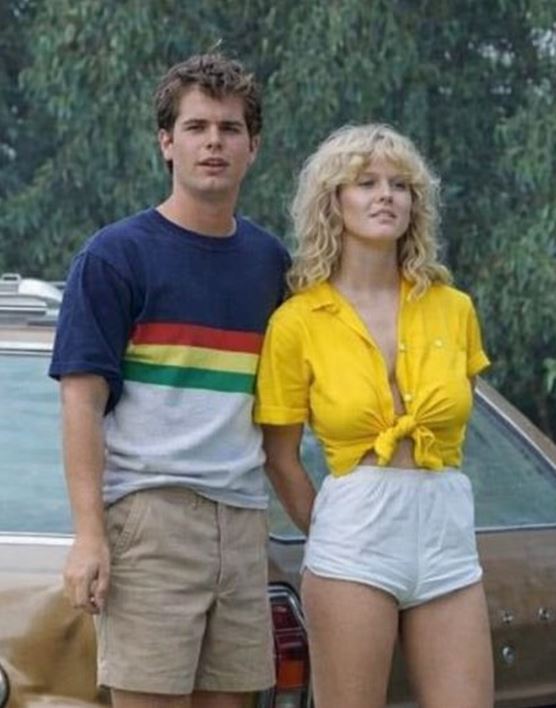
Often overlooked but never erased from horror history, Evil Town is one of those films that lingers long after the
credits roll. Released during the fearless experimentation of 1980s horror, it never achieved blockbuster fame—but it didn’t need to. Passed along through VHS tapes, late-night TV airings, and word-of-mouth recommendations, it slowly earned cult status. Its rough edges and low-budget feel only added to its unsettling charm.
At its core, Evil Town tells a deceptively simple story: a quiet community populated almost entirely by elderly residents hides a terrifying secret. The townspeople have discovered a way to prolong their lives using a serum derived from the cells of young travelers who pass through. Outsiders are welcomed—then harvested. The premise taps into primal fears: aging, exploitation, loss of control, and the moral cost of survival at any price.
Visually, the film is unmistakably 1980s. Neon-tinged fashion, small-town roads lined with tall trees, aging station wagons, and weathered houses create a nostalgic yet deeply uneasy atmosphere. Rather than relying on flashy effects, the movie builds dread through silence, stillness, and implication. The town itself becomes the monster—watchful, complicit, and eerily united in protecting its secret.
What keeps Evil Town alive today isn’t spectacle but mood. Its slow-burn tension and psychological discomfort feel timeless, even if the production style is rooted in its era. Beneath the horror lies a reflection of 1980s anxieties about youth obsession and ethical boundaries in medicine. Decades later, it remains a strange, unsettling relic—proof that atmosphere can outlive budget, and that some stories refuse to stay buried.