For almost a year, I worked remotely from the corner of my brother Marco’s dining room table, telling myself it was
temporary. Just until I saved enough. Just until I felt steady again after my breakup.
Marco had insisted it made sense.
“Stay with us,” he’d said. “Why throw money away on rent?”
His wife, Daria, had smiled sweetly. “Family helps family.”
At first, it felt that way. I bought groceries. I paid for my own essentials. I slipped Marco money for utilities when I could. I kept my head down and worked.
Then payday started feeling… wrong.
The first month, I didn’t notice. The second, I frowned at my balance. By the third, I knew something wasn’t right. Every time my paycheck hit, exactly $1,300 disappeared.
Not fluctuating. Not random.
Exactly $1,300.
I called my bank. My hands were cold as they explained it wasn’t an error. It was a scheduled transfer — to an account under Daria’s name.
I confronted her in the kitchen while she scrolled her phone like the world owed her comfort.
“Why are you taking $1,300 from my paycheck every month?” I asked.
She didn’t even look up.
“That’s your contribution.”
“My contribution?” I stared at her. “You never said anything about a fixed amount.”
Now she looked at me — and her eyes weren’t defensive. They were annoyed.
“You live here. You use electricity, internet, space. Don’t pretend you don’t.”
“You don’t just take money without discussing it,” I said. “If you want rent, we talk about it.”
She stood so fast her chair screeched across the tile.
“You’re in my house,” she snapped. “If you don’t like it, leave.”
Marco walked in halfway through.
“She’s accusing me of stealing,” Daria said dramatically.
I didn’t raise my voice.
“She’s been transferring $1,300 from my account every month. Without telling me.”
Marco looked confused. Daria didn’t deny it. She lifted her chin like she was proud of it.
“It’s household money,” she said.
And something in me went still.
This wasn’t a misunderstanding.
This was a system.
“Fine,” I said. “I’m leaving.”
Daria smirked. “Good.”
That night, I moved every dollar into a new account. Canceled the card she had access to. Changed my direct deposit. When I finished, the shared balance read:
$0.00.
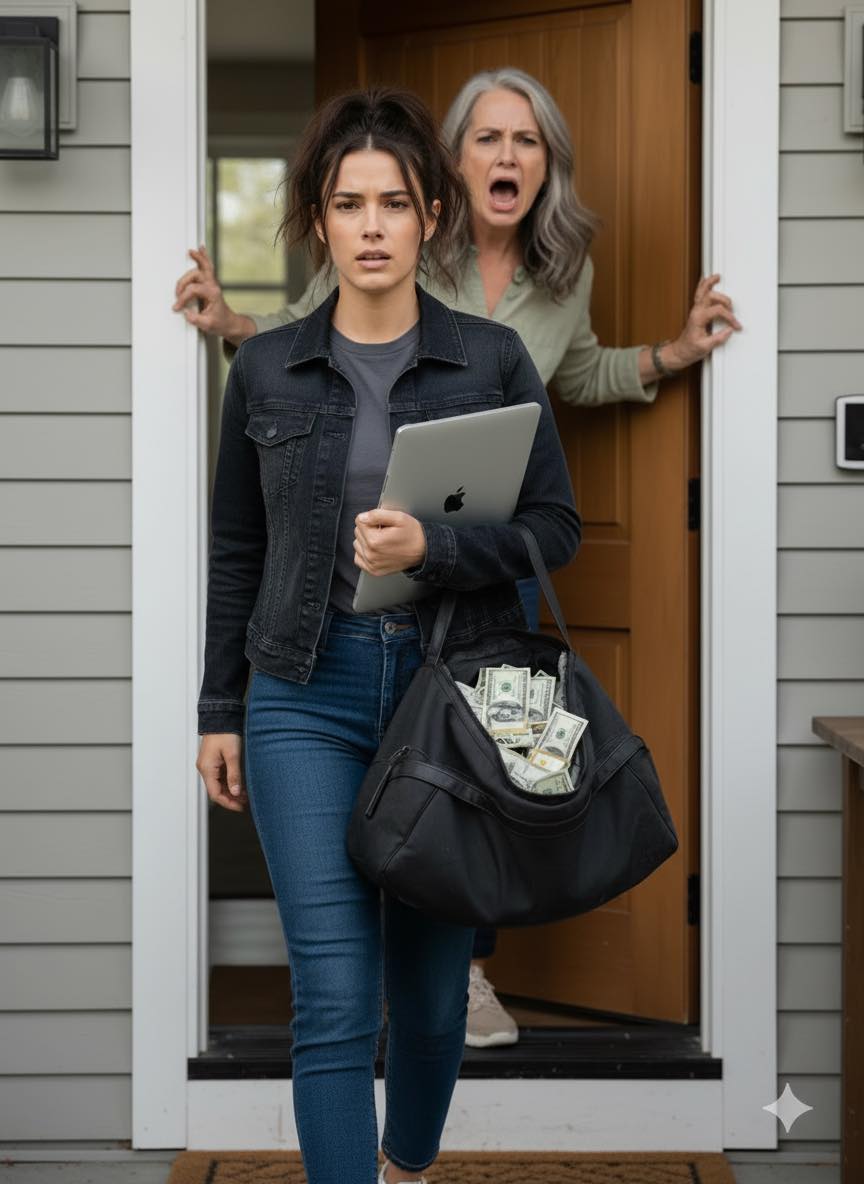
I packed one suitcase and my laptop. No dramatic exit. No slammed doors.
As I left, I heard her laugh.
“She’ll be back.”
I didn’t go back.
I checked into a cheap extended-stay hotel and slept better than I had in months.
The next morning, my phone exploded.
Marco: “Why is the account empty?”
Daria: “WHAT DID YOU DO?”
Marco: “Call me.”
I called my brother.
“I didn’t steal anything,” I told him calmly. “I moved my paycheck.”
“She says you left us with nothing.”
“No,” I said. “I stopped funding her.”
Silence.
Then I sent him screenshots. Every single $1,300 transfer.
He called me back ten minutes later.
“She told me you agreed to pay that,” he said quietly.
Of course she did.
Within an hour, Daria called me screaming.
“The mortgage bounced!” she shouted. “You embarrassed us!”
There it was.
Not outrage.
Panic.
“I didn’t embarrass you,” I replied. “You built your budget around money that wasn’t yours.”
That’s when the dominoes started falling.
Utilities bounced. Late fees stacked. The bank flagged their account. Marco discovered a credit card he didn’t know about — paid monthly with amounts that matched my transfers exactly.
When he confronted her, her story changed three times.
First: rent.
Then: family savings.
Finally: “I got used to it.”
She had quietly turned my income into a structural beam in her life.
And when I removed it, the house shook.
Two weeks later, the bank completed its review. Because I documented my objection and the transfers were unauthorized, they refunded part of the money and opened a formal inquiry into how access had been set up.
Not all of it came back.
But something more important did.
Control.
Marco showed up at my hotel once, looking shattered.
“I didn’t know,” he kept saying.
I believed he didn’t know the details.
But I also knew he hadn’t wanted to know.
“I fixed my home,” I told him. “You need to fix yours.”
Daria tried public shame next. Vague social media posts about “ungrateful people who live off others.”
So I did something simple.
I posted facts. Dates. Amounts. Screenshots. One sentence:
“I asked her to stop. She told me to leave. So I left.”
Silence followed.
And that was the result.
Not revenge.
Not drama.
Reality.
Marco started therapy. Met with a financial advisor. Admitted he had let Daria manage everything because he “didn’t like thinking about money.”
Meanwhile, I signed a lease on a small apartment. Nothing fancy. But mine.
The first paycheck that hit my new account stayed exactly where it belonged.
No mysterious transfers.
No tightening in my stomach.
No one telling me I “owed” them access to my work.
People expect the result of a story like this to be someone’s dramatic downfall.
Mine was quieter.
I stopped negotiating my dignity for a roof.
I learned that “family” is not a password to your bank account.
And I discovered that peace sometimes starts with a balance that reads:
$0.00 — and no one else can touch it.