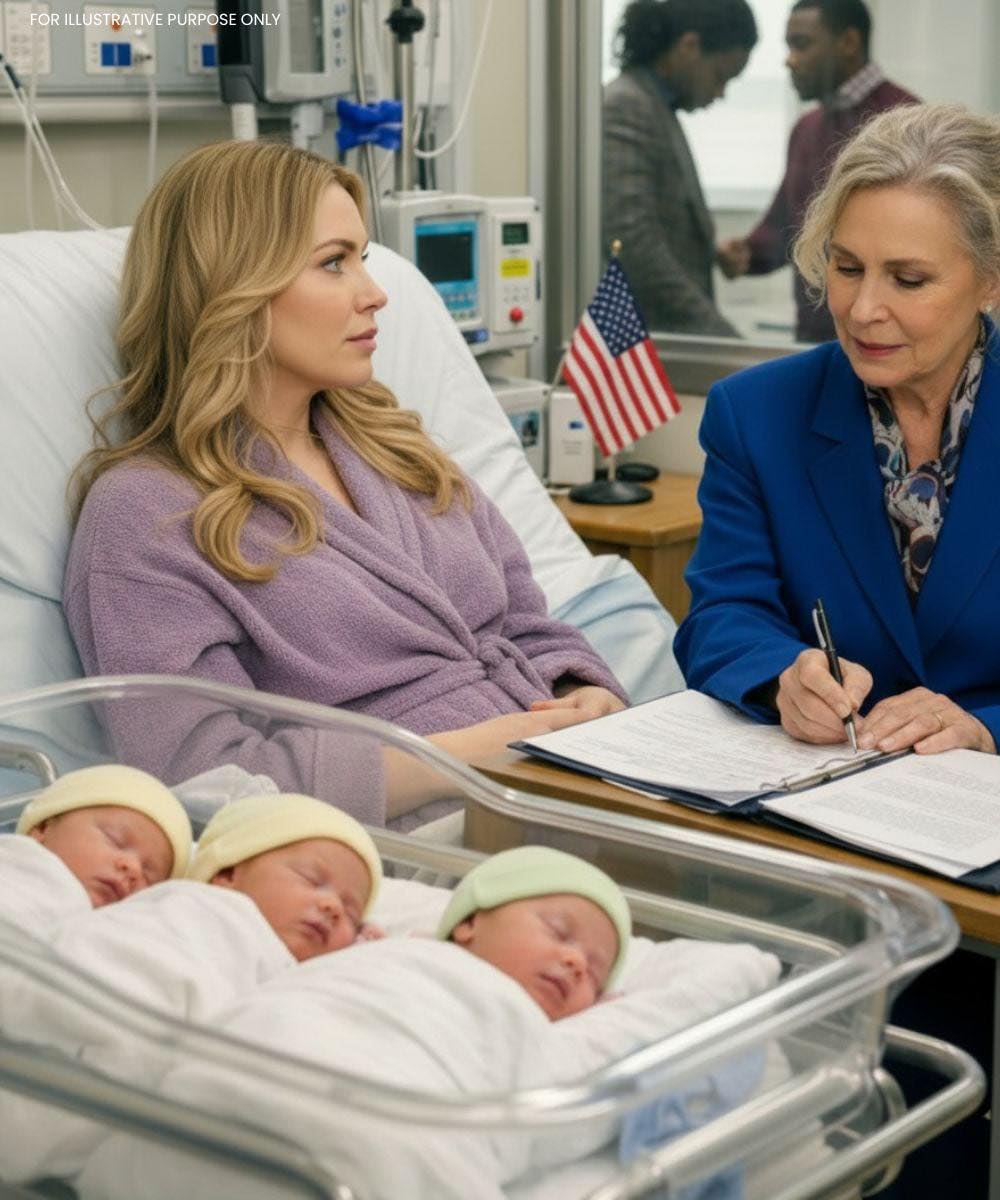
The divorce papers were signed under fluorescent lights that hummed above a hospital corridor thick with antiseptic and iron.
Inside the ICU, I lay motionless, machines breathing for me after an emergency C-section delivered our premature triplets and nearly took my life. My body had flatlined for a moment. Long enough to terrify the doctors. Long enough for my husband to decide I was no longer an asset worth keeping.
Outside my room, Grant Holloway asked his lawyer one question.
“How fast can this be finalized?”
When a physician tried to explain that I was critical, that my survival was uncertain, he cut her off.
“I’m no longer her husband,” he said. “Update the file.”
Then he walked away.
By the time I woke up days later, groggy and stitched together, the world had shifted.
I was no longer married.
My insurance had been terminated.
My hospital room had been downgraded.
The NICU bills for my babies were suddenly flagged for financial review.
Administrators spoke to me in clipped, procedural tones. “Coverage lapse.” “Custody clarification.” “Temporary liability.”
Grant hadn’t just divorced me.
He had erased me.
To him, I was a complication. A high-risk pregnancy. Three fragile newborns. A wife who might slow his company’s funding round. He believed he had acted decisively — cleanly — removing a liability before it cost him.
What he didn’t know was that his signature had awakened something older than his ambition.
Dr. Naomi Reed, the NICU director, sensed something was wrong when my babies’ care became tethered to money. She contacted an attorney, Ethan Cole.
That was when I learned about the Parker Hale Trust.
My grandmother had established it decades earlier. A quiet fortress of generational wealth, bound by clauses few remembered. One of them had remained dormant for years — a provision activating upon the birth of multiple legitimate heirs.
My triplets.
The moment Grant signed the divorce papers, that clause triggered.
I had no immediate access to the funds. But legally, I became a protected beneficiary. The trust shielded my children — and me — under specific financial and fiduciary safeguards.
Grant’s actions — terminating insurance, interfering with medical stability, filing for emergency custody — were now documented as financial coercion against a protected party.
He thought he had severed a tie.
He had stepped into a minefield.
I left the hospital with barely enough money for prescriptions. The stitches pulled with every step. Grant had already filed for emergency custody, arguing I was unstable, financially incapable, medically compromised.
Behind the scenes, Ethan and a strategist named Julian Cross told me the same thing: stay calm. Stay quiet. Document everything.
So I did.
Grant worked the public angle. Galas. Interviews. A new woman on his arm. He spoke about resilience and “making hard decisions.”
But investors began to ask questions.
The trust review triggered risk exposure investigations into his company. Financial institutions paused. Due diligence expanded. His aggressive timing — divorcing a critically ill wife hours after childbirth — began circulating in private briefings.
He reached out to negotiate.
In a polished conference room, he offered a settlement. It looked generous. Structured. Thoughtful.
I appeared exhausted. Smaller than before. I signed.
What he didn’t recognize was the acknowledgment buried inside that agreement: formal recognition of the Parker Hale Trust and documented admission of his financial decisions during my hospitalization.
That signature became evidence.
Within weeks, his board invoked a contingency clause tied to reputational and fiduciary risk. Grant was removed as CEO. Investors distanced themselves quietly, then completely.
His empire didn’t explode.
It unraveled.
At the custody hearing, Dr. Reed testified. Medical records were entered. Financial records followed. The pattern was clear.
I was granted full custody of my children.
Ninety days later, the trust unlocked.
I didn’t seek revenge. I paid every medical bill. I secured long-term care for my children. I established funding for premature infant support programs. I built a home defined not by spectacle, but by stability.
Grant lost his position. His influence thinned. The people who once surrounded him drifted away when the power did.
Months later, he asked to see me.
The arrogance was gone. The certainty too.
“I never meant for it to go this far,” he said quietly.
“That’s the problem,” I told him. “You never thought it would.”
In the end, the victory wasn’t his downfall.
It was survival.
It was holding three healthy children in my arms.
It was rebuilding peace after being discarded like a risk on a spreadsheet.
He believed erasing me would make him unstoppable.
Instead, it made him irrelevant.