The town of Willow Creek was the kind of place where midnight meant stillness, not danger.
Porch lights glowed more out of habit than fear, and the streets carried the hush of nothing happening at all.
Inside a modest one-story house on the edge of town, seven-year-old Lily stood barefoot on the cold kitchen tile, listening.
The silence felt wrong.
At 2:19 a.m., a call slipped through the quiet and reached the county emergency center. The dispatcher nearly let it roll to voicemail—late-night calls often ended in pranks or wrong numbers—but something about the steady connection made her pick up.
“County emergency services.”
There was no laughter. No confusion.
Just a small, careful voice.
“Um… hello… my parents won’t wake up,” the child said. “And the house smells strange.”
The dispatcher’s exhaustion vanished instantly.
“What’s your name, sweetheart?”
“Lily. I’m seven.”
Training took over. Calm, measured, precise.
“Lily, I need you to listen carefully. Are you inside the house?”
“Yes.”
“Okay. I want you to grab a jacket or blanket and go outside right now. Sit far away from the house. Help is coming.”
A pause.
“Is my house sick?” Lily asked.
“No, honey. We just want you safe.”
Within eight minutes, patrol cars rolled into Willow Creek. Officer Nolan Reeves stepped out and immediately caught the smell.
Gas.
His partner, Officer Mateo Cruz, noticed it too. No words were needed.
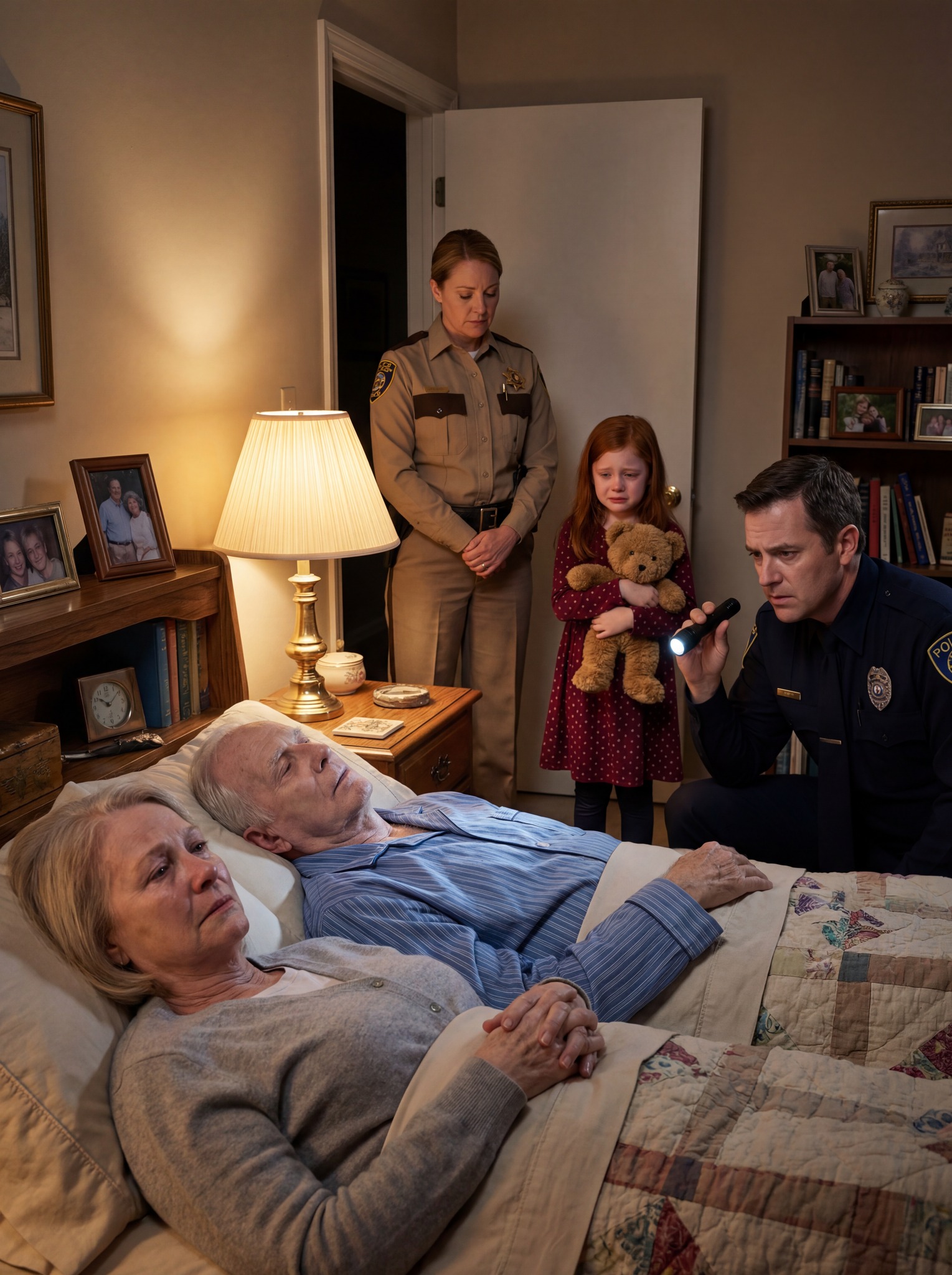
They found Lily sitting on the grass, clutching a worn stuffed fox, her face pale but steady. Reeves draped his jacket around her shoulders.
“You did the right thing,” he said softly.
Inside, the air was thick and oppressive. The officers moved carefully down the narrow hallway. Lily’s parents lay side by side on the bed, unconscious but breathing faintly.
The smoke detector blinked uselessly.
Its batteries were missing.
Firefighters forced ventilation. Paramedics worked quickly. The house slowly exhaled the poison it had been holding.
Outside, Lily watched.
“Are they going to wake up?” she asked a nurse.
“We’re doing everything we can,” the nurse replied gently.
As responders secured the scene, Cruz noticed something that didn’t sit right. The gas valve had been opened far wider than normal. A towel had been shoved into the ventilation duct near the boiler—intentionally.
This wasn’t an accident.
By morning, investigators combed through the house. The boiler had been tampered with. Someone had known exactly where to interfere.
Lily was placed in temporary care while her parents were hospitalized.
Later that day, Officer Reeves sat across from her in a quiet child services room. Crayons lay scattered across the table.
“Can you tell me what happened last night?” he asked carefully.
Lily drew slow circles on the paper.
“Dad was on the phone,” she said after a moment. “He sounded scared.”
Reeves waited.
“He kept saying he needed more time. And please.”
“Did he say who he was talking to?”
She shook her head.
“Some men came to the house before,” she added softly. “Mom tells me to stay in my room when they visit.”
That detail shifted everything.
While packing Lily’s belongings, a social worker found a notebook under her bed. Inside were drawings—shadowy figures near the house, her father shouting into a phone, and one image of someone descending the basement stairs late at night.
“I heard footsteps,” Lily told Reeves. “I thought it was Dad. But he was already asleep.”
Financial records soon revealed mounting debt. Lily’s father had borrowed money from a company with no real paper trail—one already linked to intimidation tactics in neighboring towns.
Security footage from a nearby house captured a hooded figure approaching Lily’s home just before midnight. He walked with a slight limp. He left minutes later.
Within days, investigators identified and arrested him. The case unraveled further, exposing a network that preyed on struggling families.
Three days later, Lily’s parents regained consciousness.
Doctors were blunt: they had been minutes away from death.
When Lily was allowed into the hospital room, her mother reached for her, tears falling freely. Her father’s voice trembled as he spoke.
“I’m so sorry,” he whispered. “I should have asked for help.”
Lily climbed carefully onto the bed, pressing her cheek against his arm.
“I called because you wouldn’t wake up,” she said simply.
Weeks passed. Arrests were made. Charges filed. Assets seized. Counseling and financial support were arranged for families caught in the same web.
Eventually, Lily returned home.
The house felt different—not because the walls had changed, but because the silence no longer carried fear.
Months later, Officer Reeves stopped by with a new smoke detector. Batteries already installed.
Lily opened the door with a grin, her stuffed fox tucked under one arm.
“It doesn’t smell weird anymore,” she said proudly.
Reeves smiled.
Because bravery does not always shout.
Sometimes it sounds like a small, steady voice in the middle of the night—calm enough to be heard, brave enough to act, and strong enough to save everyone inside.