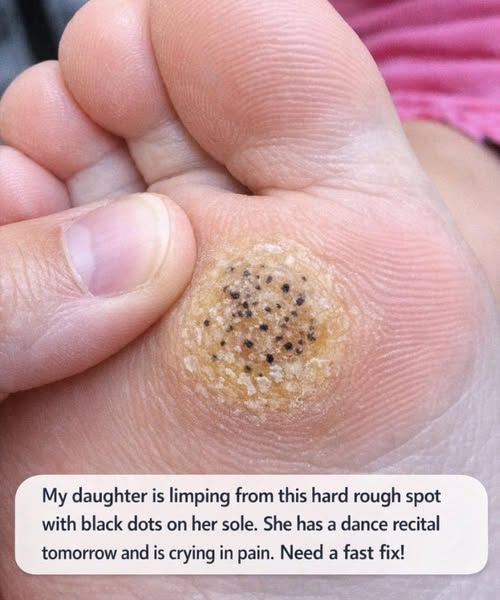
Seeing your child in pain is one of the hardest moments for any parent, especially when something important like a dance
recital is only hours away. When a child begins limping and you notice a hard, rough spot with tiny black dots on the sole of the foot, it can be alarming. The discomfort can be intense, particularly when the area is on a part of the foot that carries body weight.
With a recital scheduled for tomorrow, the main goal is to reduce pain quickly so your daughter can move more comfortably. Understanding what the spot might be, how to manage the pain safely tonight, and when medical help is necessary can make a big difference.
Understanding what the rough spot with black dots might be
A hard patch of skin with small black dots on the bottom of the foot most commonly suggests a plantar wart. This type of wart develops due to infection with the human papillomavirus, which enters the skin through tiny cuts or weak spots.
Plantar warts often form on weight-bearing areas such as the heel or the ball of the foot. Because they grow inward due to pressure from walking, they can become painful and feel like a pebble inside the shoe.
The black dots visible inside the wart are actually tiny clotted blood vessels. Many parents mistake them for dirt or small splinters, but they are one of the key signs doctors use to recognize plantar warts.
The surface usually feels rough, thick, and slightly raised, although sometimes the wart sits deeper under a layer of hardened skin. In children who dance or participate in sports, the pressure and friction from activity can make the discomfort more noticeable.
Why plantar warts can be painful for dancers
Plantar warts are not usually dangerous, but they can hurt quite a bit because of their location. Each step presses body weight directly onto the affected area.
For dancers, this can be even worse. Movements that involve jumping, spinning, or balancing on the front of the foot increase pressure exactly where the wart often develops.
If the wart becomes irritated from repeated pressure, the surrounding skin can thicken and become more sensitive. This may cause your child to limp or avoid putting full weight on the foot.
When you see your child suddenly crying from pain while walking or dancing, the wart may have become inflamed.
How to quickly check what the spot might be
Before trying to relieve the pain, it helps to look closely at the spot to confirm what it might be.
A plantar wart usually looks round or oval with a rough surface. The small black dots are visible inside the area. When you squeeze the sides of the spot gently, it may feel tender.
A splinter typically has a visible entry point and may show a tiny line or fragment under the skin.
A blister contains fluid and looks smooth rather than rough.
A callus appears thick and hard but normally does not have black dots.
If the spot clearly shows the rough texture and tiny black specks, a plantar wart is the most likely cause.
Signs that require medical care immediately
Most plantar warts are harmless, but certain symptoms should prompt medical attention right away.
If your daughter cannot stand on the foot at all, the pain is severe, or the area becomes very red or swollen, it is best to contact a doctor.
Warmth, drainage, or pus around the spot may indicate infection.
Children with weakened immune systems or certain medical conditions should also be evaluated by a healthcare provider if a wart becomes painful.
However, in many cases the discomfort can be managed temporarily at home so the child can remain comfortable until a doctor’s appointment.
Soothing the foot with a warm soak
One of the easiest and fastest ways to reduce discomfort is soaking the foot in warm water.
Fill a basin with comfortably warm water and allow your daughter to soak her foot for about fifteen minutes. This softens the thick skin around the wart and can reduce pressure on the area.
After soaking, gently dry the foot with a clean towel. Do not rub the wart aggressively, as this may irritate it further.
This simple step alone can sometimes make walking noticeably easier.
Using cushioning to reduce pressure
Reducing pressure on the painful spot is the most helpful thing you can do before the recital.
Special adhesive pads designed for plantar warts or corns are available at most pharmacies. These pads usually have a donut shape with a hole in the center.
The idea is that the padding surrounds the wart while leaving the center area untouched. This prevents direct pressure on the painful spot when walking or dancing.
Place the pad carefully over the wart and press it firmly so it stays in place.
You can add medical or athletic tape around the pad to keep it secure, especially if your daughter will be active.
Pain relief options for children
If the discomfort remains strong, an age-appropriate dose of pain reliever may help reduce inflammation and soreness.
Common options include medications containing ibuprofen or acetaminophen. Always follow the recommended dosage instructions based on your child’s age and weight.
These medications do not treat the wart itself, but they can make the area less sensitive so your daughter can move more comfortably during the recital.
Helping her walk more comfortably
Once the wart is padded, it is important to check how your daughter walks.
Encourage her to take a few steps slowly and see whether the padding reduces the pressure.
Sometimes adding an extra layer of cushioning inside the shoe, such as a gel insert or soft insole, can make a big difference.
If her dance shoes are tight, loosening them slightly or adjusting the padding inside can prevent further irritation.
Small adjustments like these can allow her to perform without constant pain.
Things you should avoid doing tonight
It may be tempting to try to remove the wart immediately, but aggressive treatments should be avoided right before an important event.
Do not cut, scrape, or dig into the wart. This can cause bleeding and increase pain.
Avoid using harsh chemical treatments for the first time right before the recital. Some wart removal products can irritate the skin temporarily.
Also avoid heat treatments or home remedies that promise instant removal, as they may damage healthy skin.
For tonight, focus only on comfort and protection.
Pharmacy treatments that help over time
Over-the-counter wart treatments containing salicylic acid are commonly used to gradually remove plantar warts.
These products soften and break down the thick skin covering the wart. With repeated use over several weeks, the wart often shrinks and disappears.
However, they are not instant solutions. Because the process works layer by layer, full removal usually takes time.
If you choose to start treatment, follow the instructions carefully and apply it only to the wart itself.
Medical treatments for stubborn plantar warts
If the wart continues to cause pain after the recital, it may be helpful to consult a podiatrist or pediatrician.
Doctors have several effective treatment options.
One of the most common is cryotherapy, which freezes the wart using liquid nitrogen.
Another option is laser therapy that targets the infected tissue.
In some cases doctors may prescribe stronger topical medications or perform a minor procedure to remove the wart.
Professional treatment can often eliminate painful warts faster than home methods.
Supporting your child emotionally
Pain right before a recital can be very upsetting for a young dancer. Children may worry that they will disappoint their teacher or miss an important moment.
Reassure your daughter that her health is the priority and that it is okay to feel nervous.
Encourage her to rest her foot before the performance and practice calm breathing if she feels anxious.
Even knowing that the pain is temporary and manageable can help her regain confidence.
Preventing plantar warts in the future
Active children, especially those who dance, swim, or use shared locker rooms, are more likely to encounter the virus that causes plantar warts.
Encouraging simple habits can reduce the risk.
Wearing flip-flops or shower shoes in public pools and locker rooms can help prevent exposure.
Keeping feet clean and dry and changing socks regularly also lowers the chance of infection.
If small cuts or scrapes appear on the feet, cleaning them and covering them with a bandage helps protect the skin from viruses.
Regularly checking your child’s feet can also help you catch unusual spots early before they become painful.
Helping your dancer stay on her feet
Although plantar warts can be uncomfortable, they are very common and usually manageable. With gentle care, cushioning, and temporary pain relief, many children can still walk and move comfortably enough to participate in activities.
For tonight, the main goal is reducing pressure on the area and keeping your daughter as comfortable as possible.
After the recital, you can focus on proper treatment to remove the wart and prevent it from returning.
Sometimes a small act of care like soaking a foot, adding padding, and offering reassurance can make all the difference between a painful evening and a child who can still step onto the stage with confidence.