I once believed first love belonged only to memory, tucked away with lockers, handwritten notes, and the certainty of youth.
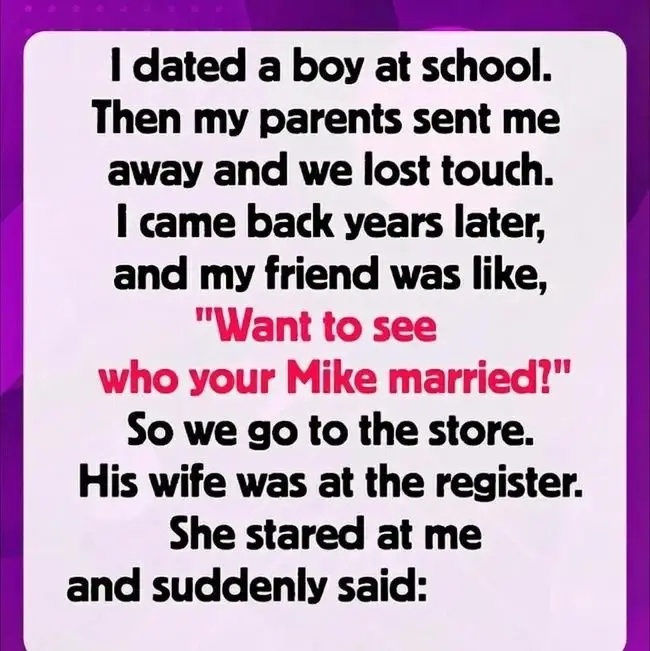
Back in school, Mike and I shared something simple and sincere—quiet walks, easy laughter, and the sense that life made sense when we were together. Then everything changed. My parents moved, I was sent away, and what felt permanent slipped into silence. Letters stopped, calls faded, and time did what it always does. I kept the memory like a pressed flower—fragile, faded, but meaningful.
Years later, I returned to my hometown as someone shaped by responsibility and experience. While talking with an old friend, nostalgia surfaced. With a gentle smile, she asked if I wanted to see who Mike had married.
I hesitated, not from longing, but curiosity. We decided to stop by the small local store where she said he worked. I expected nothing more than a quiet sense of closure.
The store hummed with ordinary life—carts rolling, music playing softly. At the register stood a woman, calm and focused. When she looked up, our eyes met, and something shifted. Not shock or tension, but recognition. She studied my face, then softly said my name.
In that moment, I understood. She wasn’t just his wife; she was someone who knew the story before her, someone who respected the past rather than feared it. We exchanged a few kind words, nothing dramatic, only mutual understanding. When I walked out, I felt unexpectedly light. Not because something returned, but because something settled. Love doesn’t vanish—it changes. Closure isn’t reclaiming the past, but honoring it, and appreciating