Not long ago, I gave my husband one of my kidneys.
I didn’t hesitate. When the transplant coordinator asked if I was sure, I said, “Test me first. I don’t care what it takes.” I believed love meant sacrifice. I believed saving his life would bind us closer.
Two days after surgery, still stitched and aching, I was lying in my hospital bed when Nick turned his head toward me and said, almost casually, “You finally fulfilled your purpose. Let’s get divorced. Truth is, I can’t stand you. And I never loved you.”
I thought he was joking.
“Stop,” I whispered. “The nurse will hear you.”
“I’m not joking, Rachel.”
Something inside me went silent.
We’d been married 15 years. We had an 11-year-old daughter, Chloe. When he got sick, I didn’t flinch. I signed every form. I went through every test. He’d squeezed my hand and called me his hero.
Now, he was planning his exit.
And not just from me.
He wanted full custody of Chloe.
“It makes sense,” he explained, as if discussing a mortgage refinance. “You’ll be recovering. You won’t be stable.”
“I just saved your life.”
“And I appreciate that,” he replied coolly. “But appreciation doesn’t equal love.”
That sentence hurt more than the incision in my side.
When I came home from the hospital, every stair felt like a mountain. Chloe hovered beside me, careful not to brush my stitches.
“Does it hurt, Mommy?”
“A little,” I admitted. “But I’m strong.”
“I’m proud of you,” she whispered.
Nick sat at the kitchen table scrolling his phone. He didn’t even look up.
A week later, I logged into our joint bank account.
My hands started shaking.
There were transfers I hadn’t approved: $5,000. $10,000. $8,000. Money moved in chunks.
“Where’s the money going?” I asked him that night.
“For my future.”
“What about ours?”
He gave me a look that felt like ice. “You still think there’s an ‘our’? I’ve already spoken to a lawyer.”
He had hired one of the best attorneys in the state — Daniel.
When the divorce papers came, they were ruthless. He asked for primary custody. The house. The car. The garage. Even my savings. There was a statement questioning my “emotional stability” after surgery.
I had no lawyer. No money. No strength.
And when the first hearing ended, I was left with almost nothing. Living at my sister’s house. My body still healing. My marriage gone.
The night before the next court date, Chloe crawled into bed beside me.
“I don’t want to leave you, Mommy. I want to live with you.”
“I’ll figure something out,” I told her.
But I had no miracle.
The next morning, I wore the only suit that didn’t press against my scar. In court, Daniel spoke smoothly.
“My client has been the primary financial provider,” he said. “Rachel has demonstrated instability.”
Every time I tried to speak, he objected.
“Speculation.”
“Emotional conjecture.”
“Irrelevant.”
I felt invisible.
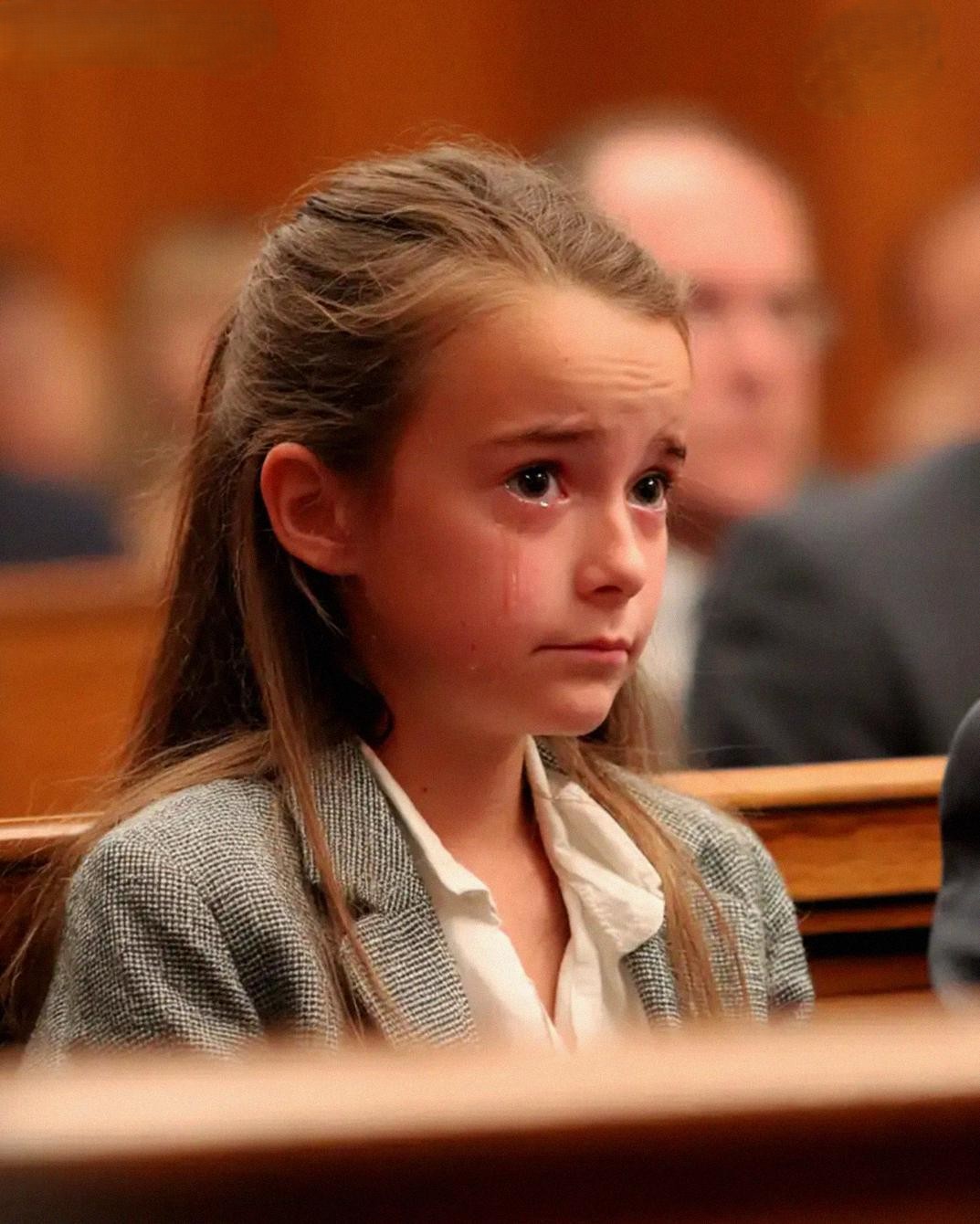
Then Chloe stood up.
“Your Honor? May I say something?”
My heart nearly stopped.
She walked forward with her backpack and pulled out her tablet — the one with the cracked corner I hadn’t thought much about.
“Can I show you something my mom doesn’t know about?”
The bailiff connected it to the courtroom screen.
The date stamp read two weeks before my surgery.
Nick appeared on the screen, sitting in our living room.
“I’m telling you,” he said to a woman off-camera, “once the transplant’s done, I’ll finally be free. I’ve already met with a lawyer. Assets are getting moved. Custody strategy’s in place. She won’t see it coming.”
The courtroom froze.
“She’s too trusting,” he added. “Always has been.”
Then the camera shifted.
“Chloe? What are you doing?” he asked.
“I’m trying to learn to record things,” her small voice answered.
The image jolted. The tablet fell. A crack. Then audio only.
“Don’t tell Mommy about the call Daddy just had,” Nick whispered. “If you keep it between us, I’ll buy you a brand-new tablet. Deal?”
In court, my daughter’s recorded “Okay” felt like a knife.
Nick leapt up. “That’s edited! It’s taken out of context!”
“Sit down,” the judge ordered.
“Do you deny making these statements?” the judge asked him.
“It wasn’t like that,” Nick muttered.
“That isn’t an answer.”
For the first time in months, I felt something I hadn’t allowed myself.
Hope.
“Temporary full custody will be granted to Rachel,” the judge announced. “All recent financial transfers will be reviewed.”
The words washed over me slowly.
Full custody.
Review of assets.
Nick’s plan was unraveling.
Outside the courtroom, he stormed toward us.
“This isn’t over.”
“You heard the judge,” I replied.
“You don’t have the money to fight me.”
“Maybe not,” I said. “But I have the truth.”
That’s when he lost control.
“I married you because I wanted a child!” he shouted. “You were willing. I figured you’d make it easy. I planned on leaving years ago. I just needed control of the finances. Then I got sick. When I found out you were a match, I couldn’t risk losing that.”
Every word cut deep.
“You used me,” I said.
“Of course I did!”
He didn’t realize Daniel had heard everything.
“I can’t represent you anymore,” Daniel said calmly. “You deliberately misled this court.”
Nick stared at him. “You’re my lawyer!”
“I was. I’m choosing ethics.”
He handed me a card. “Call this number. They’ll take your case pro bono.”
For the first time since the hospital room, Nick looked small.
Back at my sister’s house, I knelt carefully in front of Chloe.
“You saved me,” I whispered.
She smiled. “I became brave because you were.”
I gave him a kidney because I thought love meant giving everything.
But love doesn’t mean allowing someone to take everything.
The moment that stopped me wasn’t the betrayal.
It was my daughter, standing in a courtroom, refusing to let silence win.
Which part made you pause? Let’s talk about it in the comments.