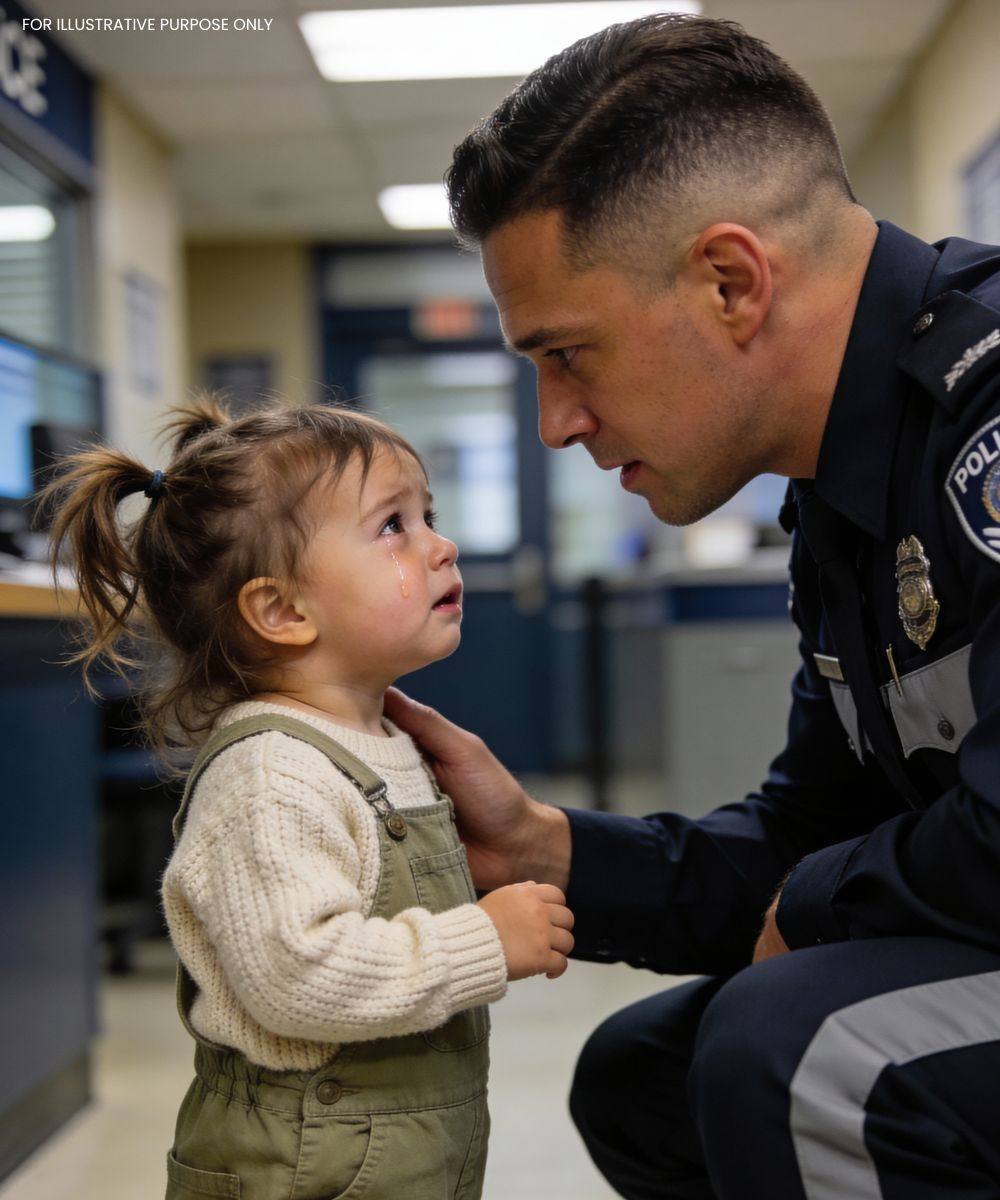
A little girl walked into a police station, convinced she had done something terrible.
That afternoon, a young family stepped quietly through the station doors—a mother, a father, and their tiny daughter, no more than two years old. The child clung tightly to her parents, her cheeks flushed, her eyes swollen from crying. She looked exhausted, like she had been carrying something far too heavy for someone her age.
Her parents didn’t look much better. They exchanged uncertain glances, clearly unsure whether they were doing the right thing—but out of options.
“Could we speak with a police officer?” the father asked gently at the front desk.
The receptionist hesitated, confused. “Of course… but may I ask what this is about?”
The man shifted, lowering his voice slightly.
“Our daughter… she hasn’t stopped crying for days. She won’t eat, she won’t sleep. She keeps saying she needs to confess something to the police. We can’t calm her down. I know it sounds strange… but we didn’t know what else to do.”
Before the receptionist could respond, a nearby sergeant overheard and stepped forward. He crouched down slowly, bringing himself to the child’s level.
“I’ve got a few minutes,” he said kindly. “What’s going on?”
The father gave a small nod of relief. “Sweetheart, this is a police officer. You can tell him now.”
The little girl looked at him carefully, studying the uniform like it held all the answers.
“Are you really a policeman?” she asked, her voice trembling.
He smiled softly. “I am. See the badge? That’s how you know.”
She nodded, taking a shaky breath as if preparing for something serious—something final.
Then, in the smallest voice, she whispered:
“I… I committed a crime.”
For a moment, the room seemed to pause.
The officer kept his tone calm and steady. “Alright,” he said gently. “You can tell me. I’m listening.”
Her lip quivered.
“Will you put me in jail?” she asked.
“That depends,” he replied softly. “What happened?”
And then it all came out at once—through tears, through hiccups, through the kind of fear only a child can feel so completely.
“I hit my brother on the leg… really hard. And now he has a bruise. And he’s going to die. I didn’t mean to. Please don’t put me in jail…”
For a brief second, the officer was caught off guard.
Then his expression melted into something warm, something deeply understanding. He reached out and gently pulled her into a reassuring hug.
“Oh no, sweetheart,” he said softly. “Your brother is going to be just fine. Nobody dies from a bruise.”
She pulled back slightly, searching his face.
“Really?”
“Really,” he nodded. “But we don’t hit people, okay?”
She sniffed, wiping her tears with the back of her hand. “I won’t.”
“Do you promise?”
“I promise.”
And just like that, something shifted.
The weight she had been carrying—so real to her, so overwhelming—lifted. She leaned back into her mother’s arms, finally calm, finally quiet.
For the first time in days, the crying stopped.
Around the station, a few officers exchanged small, knowing smiles. Not because it was funny—but because it was human. Because in that moment, they had witnessed something simple and profound:
A child learning the difference between guilt and forgiveness.
And sometimes, even the smallest confession can feel like the biggest one in the world.