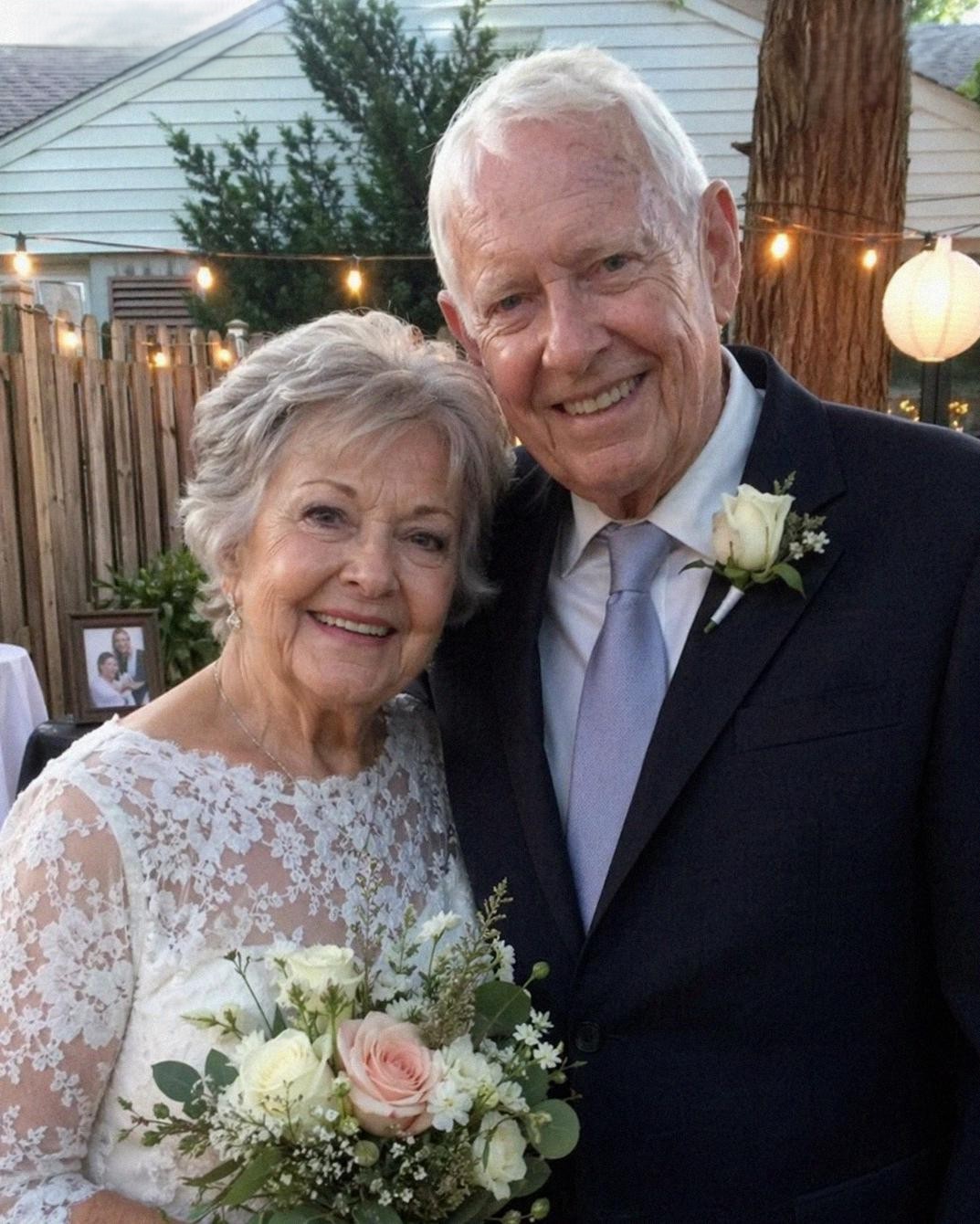
I was 72 when I got married again, and if anyone had told me that a year earlier, I would have laughed.
My first husband, Daniel, had been the love of my life. We were married for 35 years before illness took him from me, and after he died, the world became quieter in the cruelest way. My house felt too large. My evenings too long. The only place I still felt some kind of peace was church.
That was where I met Arthur.
He was sitting alone after service one Sunday, bent forward with his hands clasped tightly together. Something about him looked so deeply tired that I walked over before I could talk myself out of it.
“Are you all right?” I asked.
He looked up slowly and gave me a small, weary smile.
“I will be.”
It was such an odd, honest answer that I sat beside him.
That was how it began.
Fifteen minutes after service became twenty minutes at the potluck. Then came walks, coffee, lunch, and quiet conversations that stretched longer than either of us expected. At first, I didn’t call it love. I thought we were just two older people keeping each other company so loneliness wouldn’t swallow us whole.
Arthur told me he had lost his wife in a car accident years ago.
“It was just me and my daughter after that,” he said. “Linda.”
There was something careful in the way he said her name, but I didn’t question it.
Then I met her.
Linda arrived halfway through dessert one evening, tall and composed, with dark hair pinned back and a face that gave nothing away. Arthur stiffened the second she walked in. That was the first strange thing.
“This is Caroline,” he said. “Caroline, my daughter, Linda.”
Linda shook my hand politely, but her eyes studied me like she was trying to solve something.
Later, Arthur told me, “She’s just protective. It’s been only us for a long time.”
I believed him.
There were other moments I ignored, too. Once, at a restaurant, an older man clapped Arthur on the shoulder and greeted him like an old friend.
“Arthur! It’s been, what, twenty-five years?”
Arthur went rigid. For one second, I thought I saw fear.
Then he smiled, made a joke, and rushed us out before dessert.
When I asked who the man was, Arthur said, “Someone unbearable. That’s why we haven’t spoken in twenty-five years.”
I let it go.
That is the part that embarrasses me now—how much I let go because happiness, when it arrives late in life, feels too precious to question.
After a year together, Arthur proposed.
“I know we don’t have the kind of time younger couples imagine,” he said, holding my hand. “I don’t want to waste what we have. Marry me, Caroline.”
I said yes almost immediately.
At 72, when joy knocks, you don’t make it wait on the porch.
A week before the wedding, Linda found me alone in the kitchen. She looked nervous, almost frightened.
“Do you feel you know my father well?” she asked.
“As well as one can know another person.”
“Please don’t be glib,” she whispered. “Has he ever mentioned—”
Then Arthur walked in carrying wedding invitation samples.
He stopped cold. “Did I interrupt something?”
Linda grabbed her purse. “No. I should go.”
I didn’t understand then that she had been trying to warn me.
The wedding was small, held in Arthur’s backyard. He looked handsome in his navy suit. I wore cream because I had no desire to pretend I was anything other than what I was—a woman who had loved deeply, lost painfully, and somehow found room in her heart to love again.
When I said “I do,” people laughed softly because I said it too soon.
Arthur smiled.
For a few minutes, I was a wife again.
Then I noticed Linda standing off to the side, watching us with that same pained expression.
I finally crossed the yard to her.
“Linda,” I said, “it’s time we had a heart-to-heart.”
“I couldn’t agree more.”
She took my hand and led me away from the music, away from the guests, toward the house.