My ten-year-old daughter always rushed to the bathroom the second she came home from school. At first, I didn’t question it.
Kids get sweaty, messy, uncomfortable—it made sense. But after weeks of the exact same routine, it stopped feeling normal.
No snack. No “hi, Mom.” Just the door, her backpack hitting the floor, and then the bathroom lock clicking shut.
One evening, I asked her gently, “Why do you always go straight to the bath?”
She smiled—too quickly, too neatly—and said, “I just like to be clean.”
That answer should’ve reassured me. Instead, it settled something uneasy in my chest. Sophie wasn’t the kind of child who cared much about being neat. That sentence didn’t sound like her. It sounded… practiced.
I tried to let it go.
Until the drain clogged.
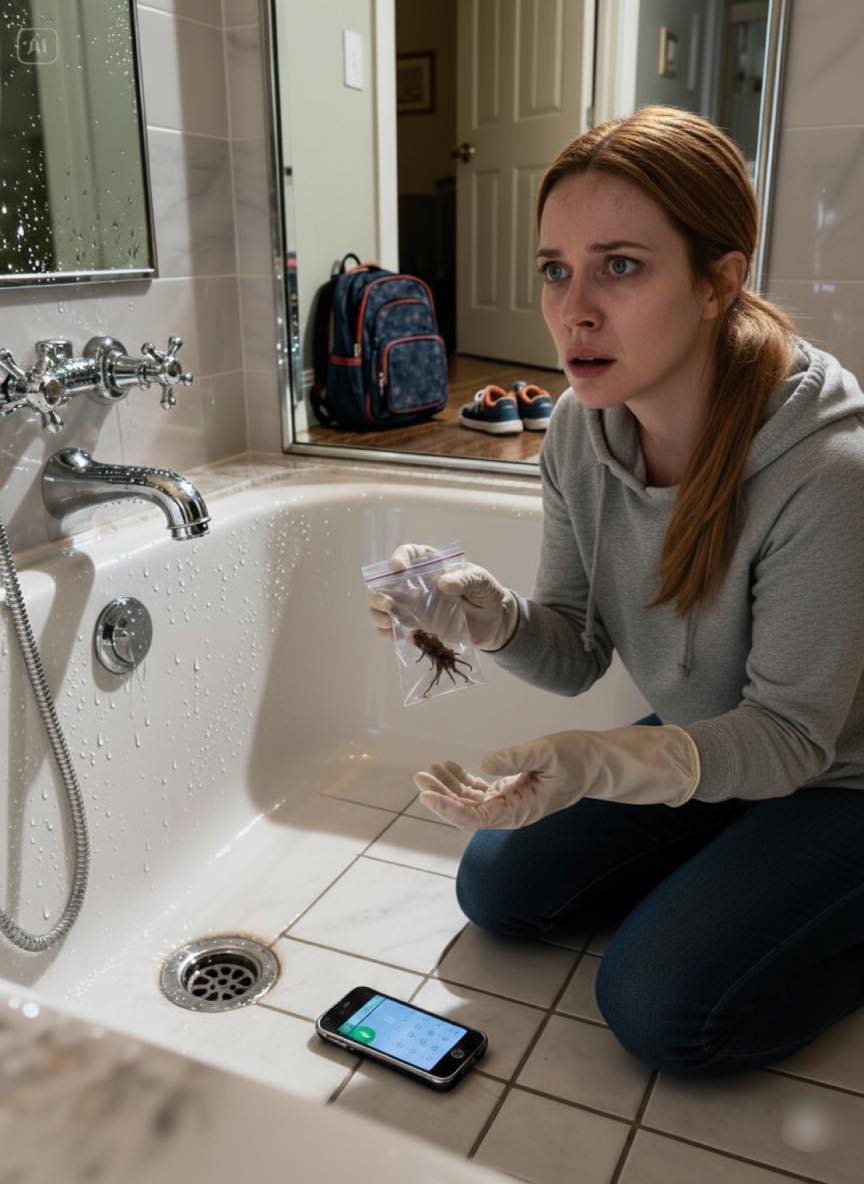
A week later, I noticed the bathtub wasn’t draining properly. Water pooled at the bottom, leaving a dull gray ring. I grabbed gloves, unscrewed the cover, and pushed a plastic snake down into the pipe.
It caught on something soft.
I pulled, expecting hair.
What came up made my stomach drop.
A clump of wet, dark strands tangled with thin fibers—not quite hair. I tugged more, and a small piece of fabric came loose, stuck together with soap residue.
I rinsed it under the tap.
As the grime washed away, the pattern became clear.
Pale blue plaid.
Sophie’s school uniform.
My hands went cold. That didn’t belong in a drain—not unless someone had been scrubbing, tearing, trying to get something out.
I flipped it over.
There was a faint brown stain, diluted but unmistakable.
My breath caught.
It looked like dried blood.
I stood there, staring at it, my mind racing for any explanation that didn’t feel like a warning I had ignored. A scraped knee. A torn hem. Anything.
But nothing explained why she rushed to wash every single day.
I grabbed my phone.
I didn’t wait. I didn’t tell myself I’d ask her later.
I called the school.
When the secretary answered, I kept my voice steady. “Has Sophie had any injuries? Accidents? Anything unusual?”
There was a pause.
Too long.
Then she said quietly, “Mrs. Hart… can you come in right now?”
My chest tightened. “Why?”