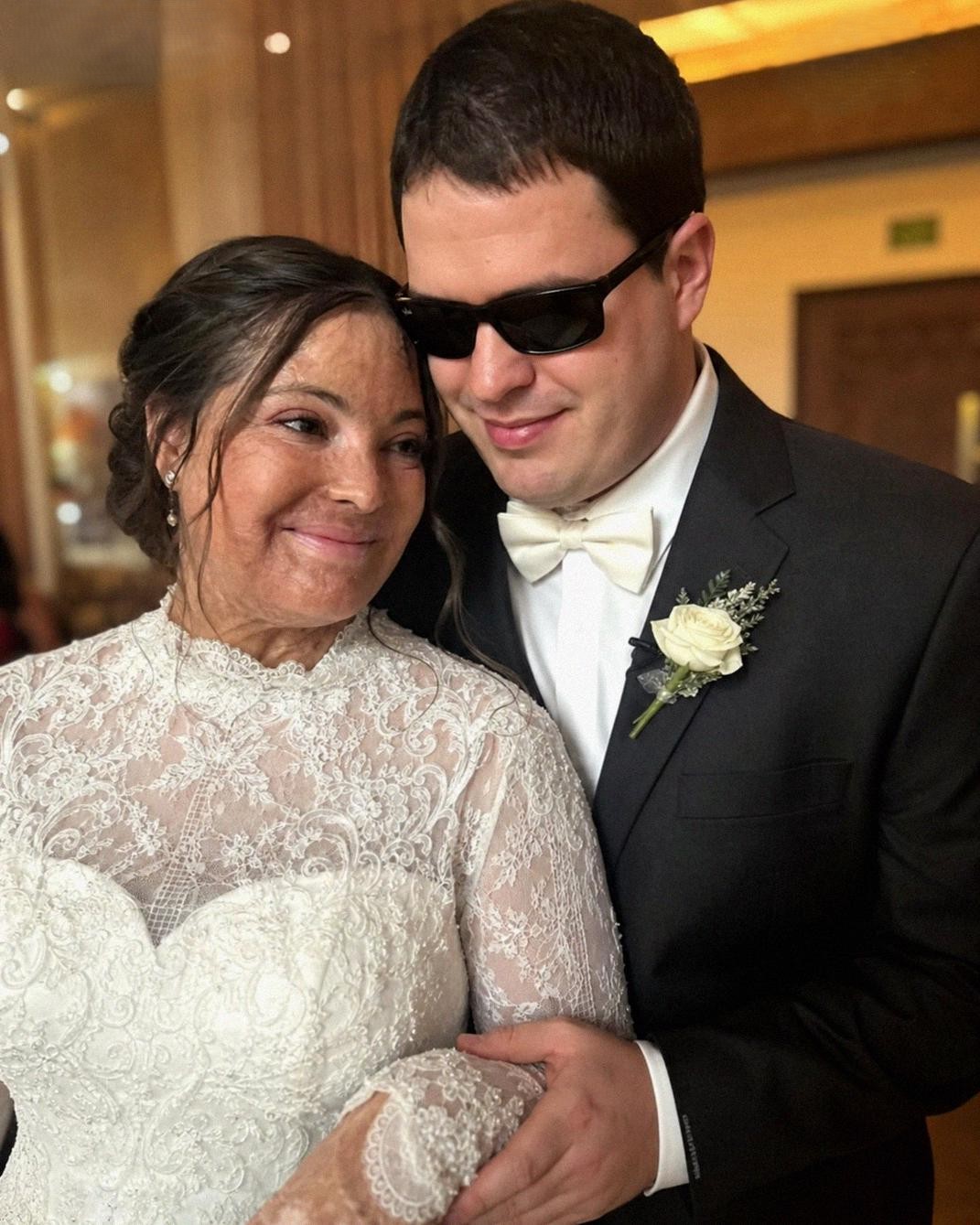
The morning I got married, my sister cried before I did.
Lorie stood behind me in the small church dressing room, staring at my reflection like she was trying to find the girl I used to be beneath the lace, the careful makeup, the years. Her hands trembled as she covered her mouth.
“You look beautiful, Merry,” she whispered.
That word still felt unfamiliar on me. Once, in a hospital room, I had heard a very different version of it—spoken softly, with pity, while half my face was bandaged and the air itself felt like something I had to borrow just to stay alive.
They called me lucky back then.
Lucky meant surviving.
Lucky meant learning how to live in a body that drew whispers in hallways and long, uncomfortable stares in public. It meant growing up with people pretending not to notice, which somehow hurt more than when they did.
Our parents were gone by then. Lorie had stepped into a life she never chose, becoming everything at once—sister, guardian, anchor. She had been there through every moment I wanted to disappear.
And now she stood behind me on my wedding day, asking softly, “Are you ready?”
I nodded, even though I wasn’t sure what ready meant anymore.
But I walked down that aisle anyway.
I met Callahan in the basement of that same church. He taught piano to children who never stayed on beat and sang louder than they played. The first time I heard him, I smiled before I even saw him—his voice carried patience I had never heard before.
“Again,” he told a boy gently. “Slower. The song isn’t running away from you.”
When I did see him, he sat at the piano wearing dark glasses, one hand on the keys, the other resting on a golden dog lying quietly at his feet. Buddy, his guide dog, looked wiser than most people I knew.
I was thirty by then. I had stopped expecting anything from men except polite discomfort. Most didn’t see me—they saw the scars first, and everything else second.
But Callahan didn’t see any of that.
And somehow, that meant he saw more.
On our first date, I tried to warn him.
“I don’t look like other women,” I said, staring down at the table.
He just smiled and reached for my hand. “Good,” he said. “I’ve never loved ordinary things.”
I laughed harder than I had in years.
That should have told me something.
By the time we stood at the altar, my heart had already decided.
The ceremony was imperfect in the best way—children playing the wrong notes, laughter slipping through the quiet, my sister crying harder than anyone else in the room. For once, I wasn’t the woman people avoided looking at.
I was the bride.
That night, after everything quieted, it was just us.
No music. No guests. No distractions.
Just the reality of what we had promised.
I guided him into the bedroom, my nerves suddenly louder than they had been all day. Not because he could see me—but because he couldn’t.
A part of me had always believed that was why this worked. That with him, I would never have to watch someone’s expression change.
He lifted his hand slowly. “Merritt… can I?”