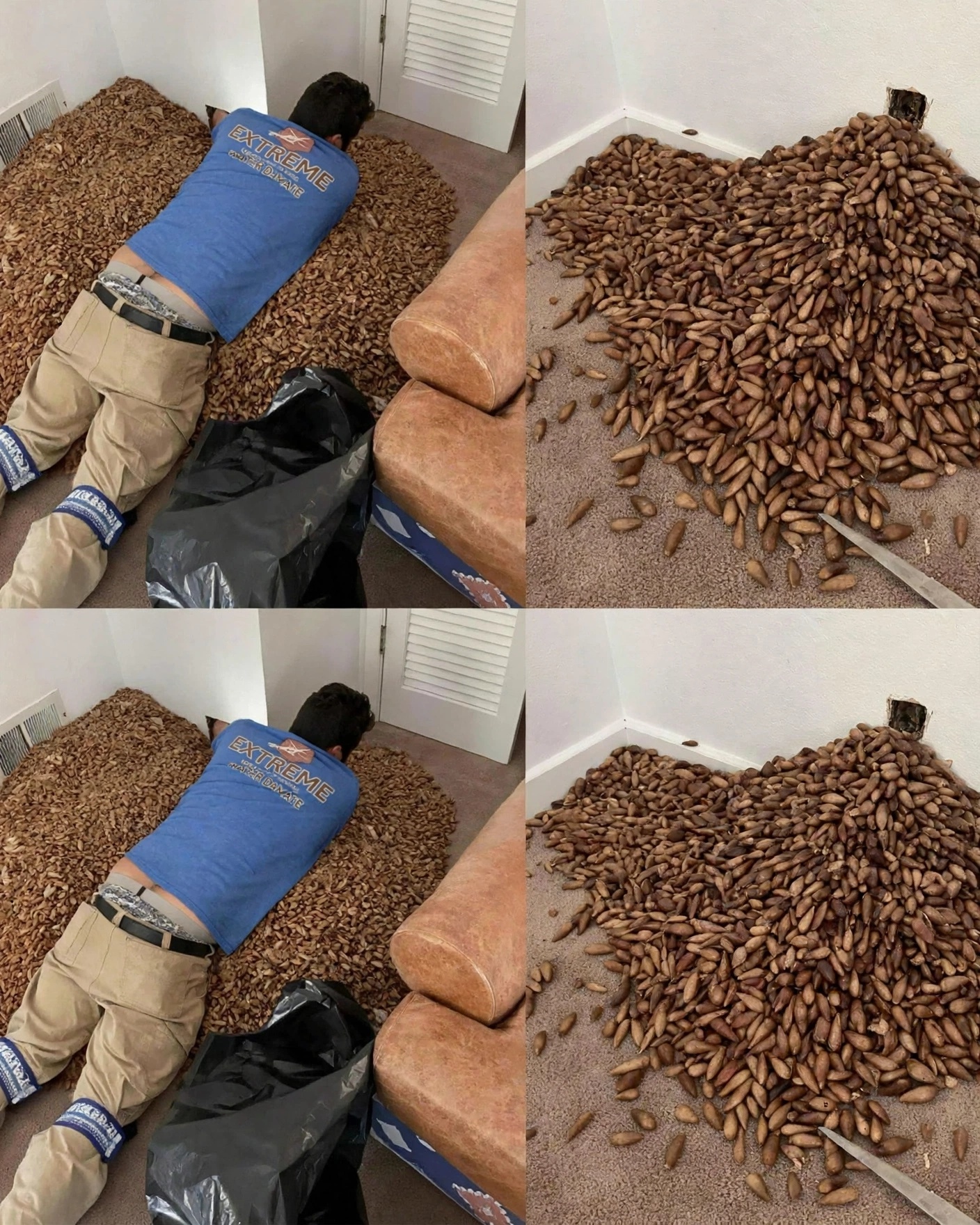
I believed my home was my refuge, a place of safety and calm, until a stench so vile and overwhelming began to leak from the very walls.
It began as a subtle, lingering smell, but soon it morphed into a putrid, rotting presence that turned my nights into a living horror. I cleaned, I inspected, and I frantically searched for the source, but the decay seemed to be everywhere and nowhere at once. What I finally uncovered when I ripped open the drywall was so hideous that it shattered my sense of security for good, exposing a dark, moldering truth.
The smell was truly the stuff of nightmares—pungent, sickly sweet, and unmistakably organic. It didn’t belong in a contemporary home. At first, I was in disbelief. I blamed the trash, the plumbing, and even the attic vents. I went on a cleaning spree, scouring surfaces until my hands were chapped, thinking that if I just used enough bleach, the invisible threat would back down. But the odor was relentless, a constant shadow that followed me from the kitchen to the bedroom. It began to seep into my mind, making it impossible to rest. Every groan of the floorboards or scuffle in the insulation felt magnified, turning my once-cherished living room into a terrain of unease.
Friends who visited would crinkle their noses, their polite attempts to ignore the smell only intensifying my growing dread. Neighbors began to look at me with sympathy, as if my home—the emblem of my stability—was suddenly crumbling. I felt like a disaster. Was I overlooking some basic task? Was there a leak I couldn’t detect? I spent endless nights staring at the ceiling, wondering if I was losing my grip, or if my house was somehow slowly perishing around me. The mental toll was far worse than the smell itself. You can adjust to a bad odor, but you cannot easily live with the growing, corroding suspicion that your shelter has become a mausoleum.
After weeks of anguish, I reached a breaking point. I couldn’t function, and I couldn’t live like this anymore. I grabbed a box cutter and a flashlight, driven by a desperate, frenzied need to confront the enemy head-on. I decided to stop speculating and start cutting. I started with a small, unnoticeable section of the drywall in the hallway where the odor seemed most intense. My heart pounded against my ribs as I sliced through the material. As the board gave way, the source of the nightmare exposed itself.
There, wedged within the dark, narrow confines of the wall cavity, was the decomposing remains of an animal that had stumbled into a structural gap and been unable to flee. It was a sight that made my skin crawl and my stomach churn. For weeks, I had been inhaling the decay of something that had perished in the cold, tight space behind my living room, never knowing it was there. The mystery was resolved, but the horror was just beginning. It was not a failure of hygiene, as I had feared, but a freak occurrence of nature—an incursion that had occurred in a place I didn’t even know existed.
The cleanup was an ordeal of its own. I couldn’t handle it alone. I had to call in professionals who specialized in hazardous waste and restoration. They arrived in full protective gear, their faces expressionless as they dismantled sections of my wall, removed the tainted insulation, and sanitized the very studs of the house. It felt like an invasive procedure, stripping my home down to its frame to extract the rot. They worked for days, sealing every tiny gap, vent, and fissure where a critter could possibly squeeze through, ensuring that no stray creature could ever find its way into my walls again.
As the repairs were completed and the fresh coat of paint was applied, the physical odor finally disappeared. But the experience left a lasting mark on my perspective. My home no longer felt like a passive, unmoving container for my life. I realized that a house is a living, breathing entity that requires constant watchfulness. We spend our lives focusing on the decor, the furniture, and the surface-level appearance, completely disregarding the intricate, dark, and hidden systems that keep the structure intact. We assume that because the foundation is sturdy, everything is fine, but the reality is that rot can fester in the shadows, fueled by the smallest of mishaps.
I have become a different homeowner since that day. I examine the exterior perimeter of my house every weekend, looking for tiny fractures in the foundation or gaps around the roofline that I used to dismiss. I trust my intuition now. If I smell something out of place or hear a sound that doesn’t belong, I don’t wait for it to fade. I investigate at once. I’ve learned that the feeling of security is not a given; it is something that must be maintained through upkeep, awareness, and the willingness to face the uncomfortable truths that might be hiding in the dark.
My home is tranquil once again, and for that, I am profoundly thankful. But every time I walk down that hallway, I remember the lesson carved into the drywall. We often feel that our homes are impregnable fortresses against the outside world, but we are always susceptible to the small, unexpected forces of nature. Trust your instincts. Investigate the irregularities early. And never underrate the importance of knowing exactly what is happening in the hidden spaces of your life. When you take action and face the problem directly, you don’t just clean up a mess—you repossess your peace, your sanctuary, and your sense of self.