My Family Ignored My Boundaries, So I Sold My House Before Christmas

PART 1: THE CHRISTMAS I FINALLY SAID NO


For eleven straight years, my home became my family’s unofficial holiday getaway. Every December, vehicles pulled into the driveway without anyone bothering to ask, suitcases filled the entrance, and relatives claimed bedrooms as though they already belonged to them. I handled everything—cooking huge holiday feasts, making up beds, stocking everyone’s favorite drinks, buying additional gifts, washing mountains of dishes, and cleaning up after people who acted as if my exhaustion was simply another Christmas tradition. In the beginning, they appreciated my efforts. Over time, appreciation disappeared and entitlement took its place.

My brother Ryan always showed up ahead of everyone else with his wife Megan, their three kids, and enough luggage to last several weeks. He insisted he came early to help, but his biggest accomplishment was usually finding somewhere to plug in his phone. My sister Bethany constantly helped herself to my personal belongings without asking and laughed whenever I reminded her to respect my space. My mother preferred standing in the kitchen with a glass of wine, criticizing everything I cooked while never once offering to wash a dish or lift a single pot.

Last Christmas was the breaking point. Nineteen people crowded into our three-bedroom home. Not one person brought groceries, contributed toward expenses, took out the trash, or even stripped the beds before leaving. When I asked Ryan to carry two garbage bags out to the garage, he leaned back on the sofa with a grin.

“You’re the organized one, Claire. I’d probably put them in the wrong place.”

The next morning, I opened the refrigerator and found that the three-layer cake I had baked for David’s parents was gone. All that remained were a few crumbs and a streak of frosting across the serving plate.

Megan barely looked away from her phone.

“The kids found it. What did you expect, leaving it somewhere they could get to it?”

As I stood there holding the empty plate, everything finally became clear. My family no longer treated me like a daughter, a sister, or even the person opening her home to them. I had become their cook, cleaner, hotel manager, and the one who was blamed whenever I dared ask for help.

This year, the family group chat started making plans for another Christmas at my house without asking me first. For the first time in over ten years, I sent the message I had always been too afraid to write.

“I’m not hosting this year. I need to rest. Someone else can host, or we can make different arrangements.”

My mother answered almost immediately.

“Don’t be selfish.”

Ryan followed with:

“We already told the children we were coming. They’re excited.”

A few moments later, Bethany added:

“Breaking tradition just because you don’t feel like participating? People will remember this, Claire.”

Within the hour, Bethany posted a dramatic message on Facebook accusing an unnamed family member of putting personal comfort ahead of family. My mother immediately liked it, and cousins who had happily enjoyed my hospitality for years began leaving comments about loyalty and the true meaning of Christmas.

I almost replied by posting photos of the stained sofa, overflowing trash cans, wrecked guest rooms, and piles of dirty dishes. Instead, David gently rested his hand over mine.

“Don’t answer tonight. They aren’t trying to understand you. They’re trying to push you back into the role you’ve always played.”

He was absolutely right. Any explanation I gave would only become another chance for them to wear down my boundaries until they no longer existed. So I saved screenshots of every message and decided to do something none of them would ever expect.

On Monday morning, I called a realtor.

PART 2: THE HOUSE THEY THOUGHT BELONGED TO THEM

The realtor came by on Tuesday. By Wednesday, three offers were already on the table. I accepted one from a young couple who wanted a fast closing and completed the paperwork without saying a word to my family. While they continued chatting about bedrooms, presents, and Christmas breakfast in the family group chat, David and I quietly packed up everything we owned.

The first thing I sold was the dining table. It had witnessed eleven Christmases filled with holiday dinners, scratches, stains, and memories of relatives relaxing after meals while I stood alone clearing every plate. Next went the guest bed, the sofa bed, and the expensive dinnerware everyone loved using but never bothered to wash. By December twentieth, there was barely anything left inside the house. Instead of feeling sad, I finally felt like I could breathe again.

On December twenty-second, my mother called.

“Claire, honey, we’re about two hours away. Please prepare the guest room for the children. Ryan is driving, so everyone is hungry. Have something ready when we arrive.”

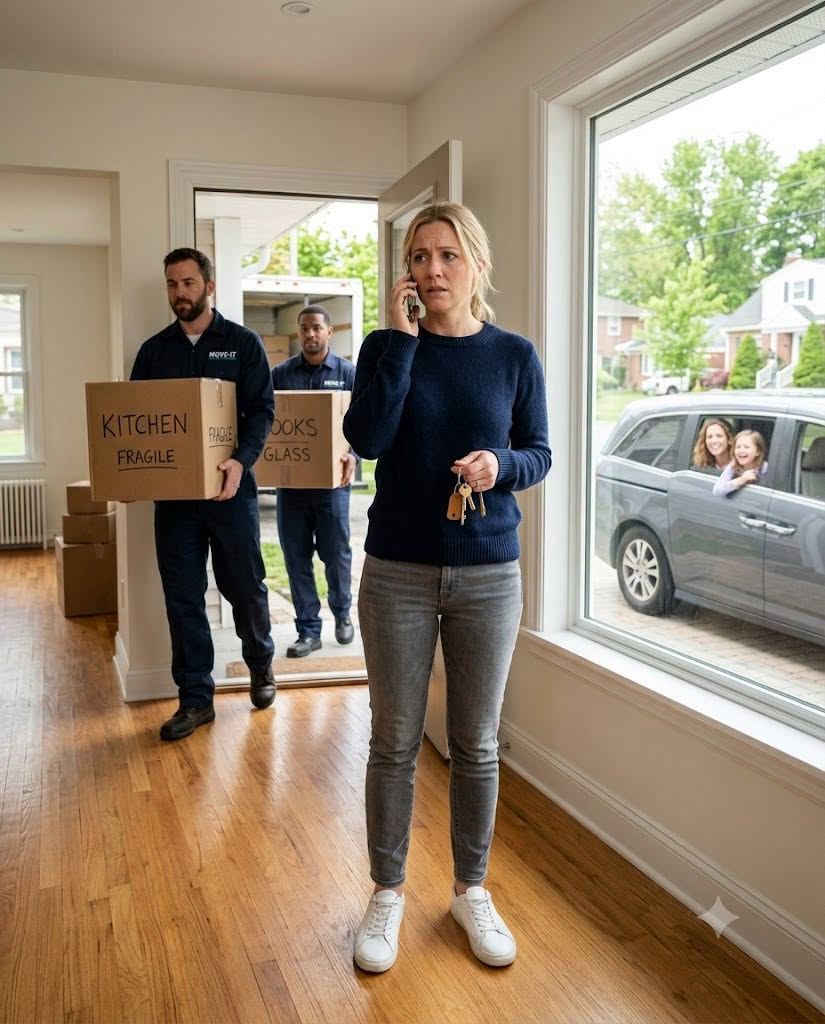
I was standing in the middle of the empty living room. Our car was already packed outside, and the moving truck had just arrived. Parked behind it was a blue hatchback belonging to Rebecca, the woman who had bought the house.

“Mom, you need to turn around.”

Her warm voice disappeared instantly.

“What do you mean? We’re almost there. Don’t start this today.”

Just then, a new message appeared in the family group chat from Bethany.

“Almost there. Have your cameras ready in case Claire creates a scene and embarrasses Mom.”

David glanced over my shoulder to read it and immediately went silent.

My mother noticed the pause.

“Claire, what did you do?”

Then I heard Ryan’s voice through the phone.

“Why is there a moving truck outside your house?”

I looked around the empty rooms and answered in a calm voice.

“I sold it.”

No one said a word for several long seconds.

Ryan finally broke the silence with a laugh.

“That’s not funny.”

“I’m not joking.”

“You can’t sell the house without telling us.”

“It was my house. I had every right to sell it—and I did.”


Bethany insisted I was only pretending, but I calmly told her the sale had officially closed that very morning. The movers were loading the last of our belongings, and the woman standing in the driveway was now the legal owner.

By that point, their cars had already turned onto our street. The children climbed out carrying backpacks and pillows. My mother walked straight up to the porch and addressed Rebecca.

“We’re here for Christmas. This is my daughter’s house.”

Rebecca looked uneasy.

“I’m sorry, but I bought this property. We finalized the closing today.”

“That can’t be right. Claire lives here.”

Rebecca glanced toward the front window.

“She did.”

For the last time, I opened the front door and stepped outside with the final house key in my hand. Relief washed over my mother’s face.

“Tell her there’s been some kind of mistake.”

“There isn’t.”

I introduced Rebecca and placed the key into her palm.

“Congratulations. It’s your home now.”

Bethany looked at me in disbelief.

“You actually went through with it.”

“I’ve never been more certain about anything.”

Ryan stared at the empty windows and the moving truck.

“So where are we supposed to stay?”

That single question told me everything I needed to know. No one asked if I was okay, why I had chosen to move, or whether their behavior had hurt me. Their only concern was that they no longer had a free place to stay.

“Not with me.”

My mother’s eyes filled with tears.

“You’ve destroyed Christmas.”

“No. I finally stopped letting all of you destroy mine.”

She called me selfish, but David stepped forward beside me.

“This isn’t selfish. Claire finally realized that being exhausted isn’t the same as being loved. She gave all of you eleven Christmases. She has every right to keep the twelfth for herself.”

We got into our car and headed north toward a small cabin we had rented in the mountains, leaving my family standing beside their luggage to figure out their own holiday plans.

PART 3: THE HOME I FOUND WITHOUT THEM

The cabin had a single bedroom, a tiny kitchen, and absolutely no room for unexpected visitors. Snow drifted outside while David and I sat quietly beside the fireplace without saying a word. On Christmas morning, I woke up at six out of pure habit, expecting the usual rush of preparing turkeys, casseroles, coffee, dishes, and breakfast for demanding relatives.

But the panic never arrived.

David opened one eye.

“You’re awake.”

“I feel like I forgot something important.”

“You did.”

“What?”

“You forgot to take care of yourself. Go back to sleep.”

So I did.

A few days later, my aunt Linda called to apologize. She told me that my mother had eventually ended up hosting everyone at her own house. By the time dinner was over, she was yelling because no one had helped or shown any appreciation. Afterward, she stood alone at the sink scrubbing pots while eighteen people sat in the next room watching television.

“She was crying over the sink,” Linda told me. “I think she finally understands now.”

I hadn’t sold my house to get revenge on my mother. I sold it because I couldn’t survive another year of being treated like unpaid help. But for the first time in her life, she had experienced the weight I had been carrying all those years.

In February, she called me.

“I owe you an apology. I hosted one dinner, Claire. Just one. I honestly don’t know how you managed eleven years without throwing every one of us outside into the snow.”

“You never asked how I managed.”

“No. I just assumed it was easy because you always made it look that way.”

She asked if I thought I could ever forgive her.

“It’s going to take time. But I’m willing to give it that time.”

Then I laid out my new boundaries.

“If we ever spend Christmas together again, everyone brings food. Everyone helps clean up. And nobody stays overnight unless I personally invite them ahead of time.”

“Deal.”

The following December, David and I were living in a smaller house with one bedroom, a simple office, and a dining table that comfortably seated four people. On Christmas Day, the doorbell rang. For a brief moment, my body remembered the chaos of the previous eleven years.

Then I opened the door.

My mother stood there alone, holding a homemade pumpkin pie. There was no suitcase, no cooler, and no line of family members behind her.

“I’m a little early. I can wait in the car if you’d rather.”

“I invited you. You’re welcome here.”

“I just wanted to make sure I remembered how invitations are supposed to work.”

For the first time in many years, we both laughed.

She came inside, wiped her shoes at the door, set the pie on the kitchen counter, and finally spoke the words I had waited almost my entire life to hear.

“What can I do to help?”

Selling the house wasn’t the greatest thing I let go of. What I truly left behind was the belief that I had to keep everyone else comfortable in order to deserve my place in the family. I no longer believed that love meant endless sacrifice or that saying no meant I deserved to be rejected.

For eleven years, I devoted myself to making my home feel welcoming for everyone else.

Only after leaving it behind did I finally learn how to make a home for myself.