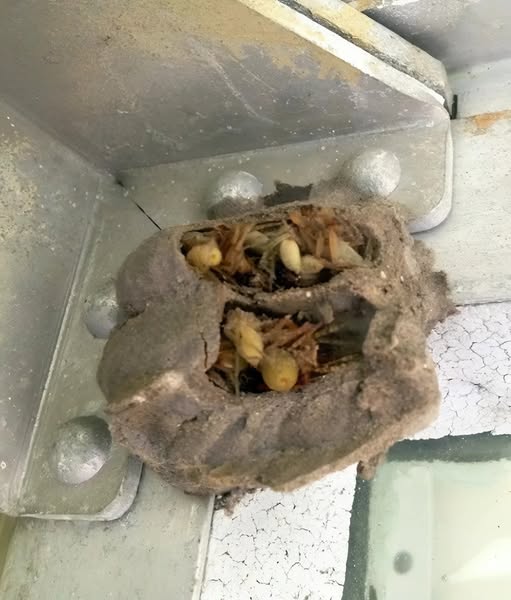
That morning I only went into the garage for a toolbox, but something pulled me toward the far corner.
Behind an old cabinet, I saw what looked like a dusty, gray mound. Then it twitched. Stepping closer, I realized it wasn’t junk at all—it was a nest. Thick layers of webbing swirled together into a massive cocoon, pulsing with life. Dozens of spiders scurried across its surface, guarding clusters of eggs. It wasn’t a web; it was a city.
I bolted out, heart racing, and spent an hour convincing myself I’d imagined it. But when my husband looked, his face hardened—he saw it too. Webs stretched along walls and shelves, strands glinting in the dim light. The cabinet had become a fortress, and the eggs clung like pearls of dread. Suddenly the garage we’d ignored for years felt like it had been quietly claimed by something else.
We called an exterminator, who stripped away the silk and destroyed the nest. Even after it was gone, the memory lingered. For days I avoided the garage, haunted by the thought of tiny legs crawling just out of sight. Our “storage space” no longer felt safe; it felt like a reminder of how much we’d overlooked.
Months later, I still pause before opening that door. The exterminator swears it’s clear, but I’ve learned a harder truth: nature is always pressing at the edges, thriving in forgotten corners. Fear gave way to respect. Our home may feel controlled, but the wild is never far—it only waits for us to stop looking.