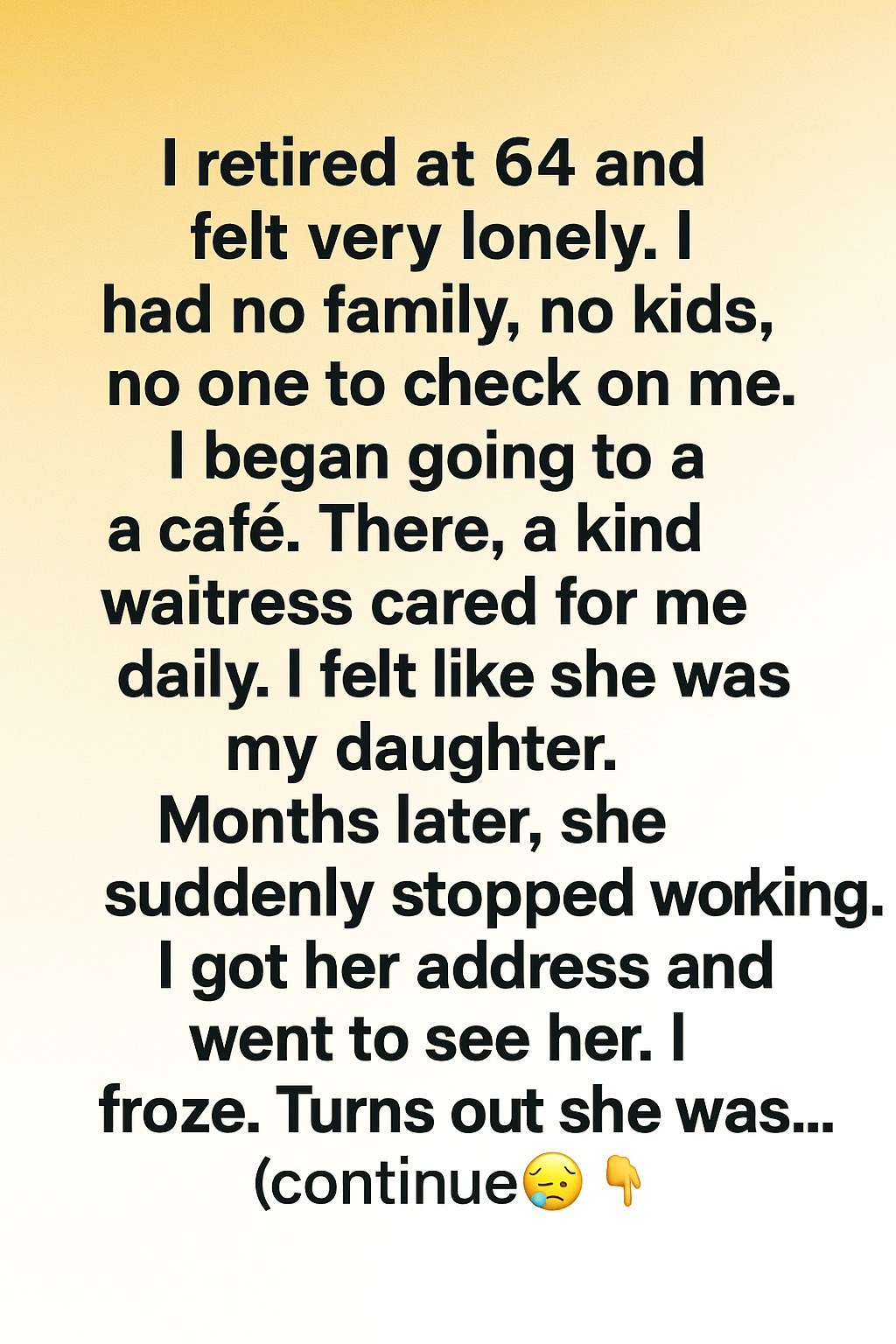
Retiring at sixty-four was supposed to feel like freedom, but instead it arrived as a long, echoing silence.
With no family, no children, and no one expecting me anywhere, my days blurred together until they felt interchangeable and hollow. Eventually, I began visiting a small café near my apartment, not for the coffee so much as the comfort of being seen. There, a young waitress greeted me every morning with the same gentle smile, remembered my order without asking, and noticed when my hands shook or my voice sounded tired. Her kindness was simple and unforced, yet it slowly became the anchor of my routine. In my loneliness, I let myself imagine she was something more, something like the daughter I never had, even though she never encouraged that idea. She was just kind, and at that point in my life, kindness felt enormous.
Then one morning, she wasn’t there. Days passed, then weeks, and her absence settled into me like a fresh ache. No one at the café could tell me much, only that she had quit suddenly. Worried and unsettled, I found her address through a coworker and decided to visit, unsure whether I was crossing a line but unable to let the silence stretch any further. When she opened the door to her small, worn apartment at the edge of town, I froze. This was not the life I had imagined for her. She looked exhausted but still managed a polite smile, inviting me inside and offering tea the same way she always had at the café. That familiar gesture dissolved my embarrassment and opened the space for truth.
She told me she had left her job because her father was ill and needed constant care. Long shifts were no longer possible, and her life had narrowed to responsibility and worry. As she spoke, I realized how much I had projected onto her, filling the gaps of my own loneliness with assumptions about her role in my life. To her, our daily conversations had been moments of basic human decency. To me, they had been proof that I still mattered. I apologized for showing up unannounced and for assuming she had simply disappeared. She admitted she worried I would think she didn’t care, and in that moment, we finally met as equals, not as customer and waitress, not as substitute family, but as two people who had briefly steadied each other without fully realizing it.
We talked for hours that afternoon, sharing fears we rarely voiced aloud. I spoke about the terror of retirement and the way quiet can swallow you whole if you let it. She spoke about money, obligation, and the weight of caring for someone you love. When I left, I didn’t feel abandoned anymore. I felt grounded. I still visit the café, though she no longer works there, and sometimes we meet for tea when life allows. I learned that loneliness doesn’t vanish when we assign people roles they never agreed to play. It fades when we accept relationships for what they are—honest, imperfect, and temporary. I didn’t find a daughter. I found something just as meaningful: a reminder that connection can still grow, even when you think your story is winding down.