After a decade on emergency calls, you start to recognize patterns. Panic has a sound. So does imagination.
Most late-night calls involving children fall somewhere between the two—fear shaped by shadows, noise, or the quiet exaggerations of the dark.
But that night was different.
The voice that came through wasn’t loud. It wasn’t frantic. It was careful.
Careful in a way that made every instinct sharpen.
“My parents aren’t home,” the little girl whispered. “Someone is hiding under my bed… please come.”
She wasn’t crying. She wasn’t guessing.
She was managing her fear.
That’s what made it serious.
We traced the address slowly, piece by piece, as she read it off a courier box. She moved through the house while we stayed on the line, her breathing shallow, each step measured. There was something in the background—soft, indistinct—but enough to make you sit straighter.
Alone child. Unknown presence. Missing adult.
That’s not imagination anymore. That’s a situation.
By the time we pulled up to the house on Willow Lane, everything felt too still. The kind of stillness that doesn’t reassure you—it warns you.
The door opened before we knocked.
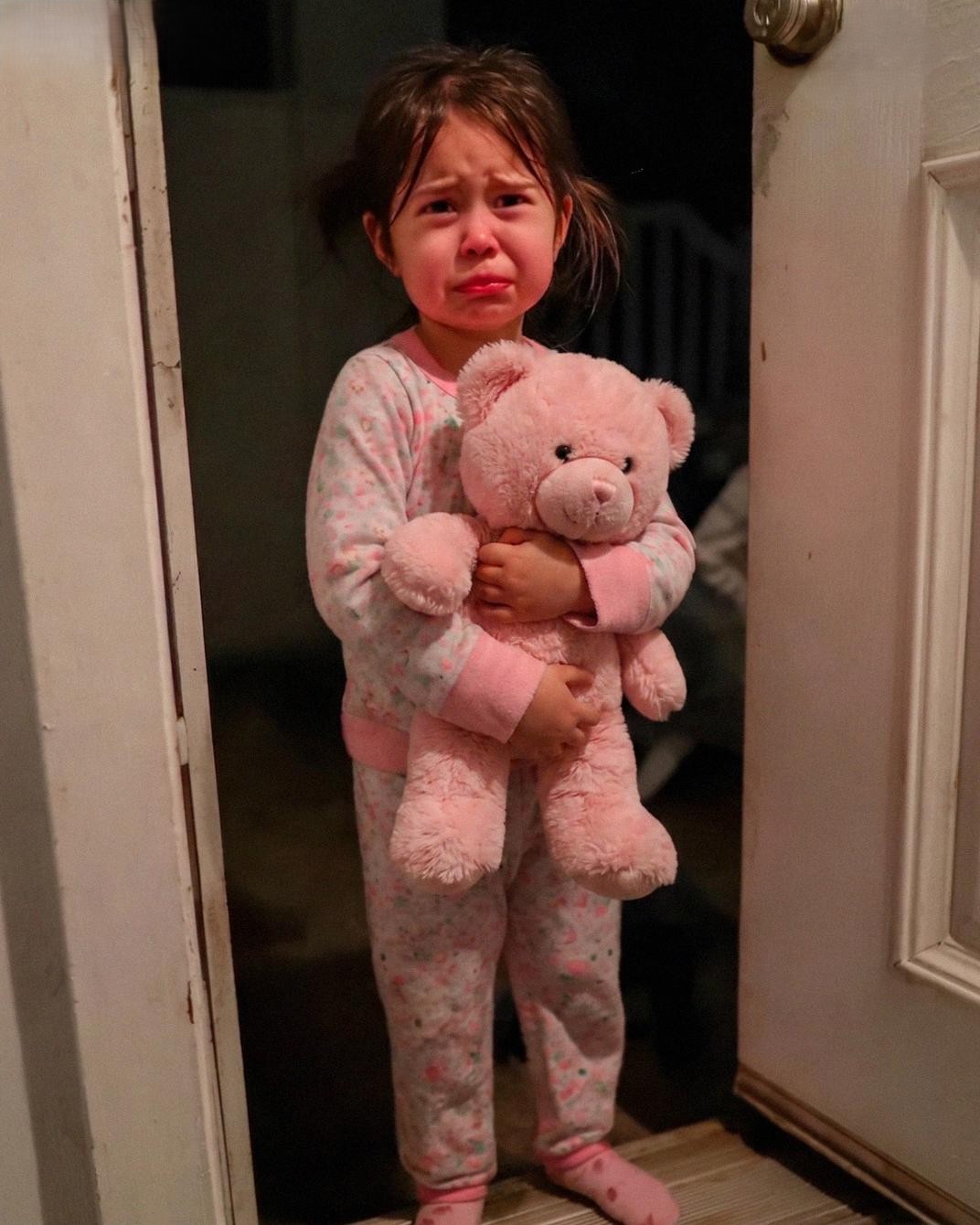
She stood there in pink pajamas, gripping a worn teddy bear like it was holding her together. Her eyes went straight past us, toward the staircase.
“There’s someone under my bed,” she said again, quieter this time, like repeating it made it more real.
We cleared the house quickly. Living room, kitchen, back door—nothing. No signs of forced entry. No broken windows. No movement.
Everything looked… normal.
And that’s what made it worse.
Because fear that doesn’t match the environment is either imagined—or deeply misunderstood.
Luis gave me the look. The one that says, We’ve seen this before.
He knelt beside her. “You’re safe, sweetheart. We checked everything.”
Her face crumpled instantly.
“You didn’t look under the bed.”
That stopped me.
It would’ve been easy to dismiss it. We’d already cleared the house. The logical explanation was right there, waiting to be accepted.
But something about her insistence—the precision of it—felt different.