It was a quiet Wednesday afternoon when my phone rang, and I heard my son’s voice brighter than it had been in years.
“Mom, I have amazing news,” he said, almost breathless. “I’m getting married tomorrow to Vanessa. No waiting—we’re throwing a surprise wedding at the Mirador del Pacífico Club.”
I barely had time to smile before he rushed on, his excitement turning into something sharper.
“Oh, and one more thing… I’ve already transferred all the money from your accounts into mine. I’ll need it for the wedding and our honeymoon in Paris. And your beachfront apartment—the one you love? I sold it this morning using the power of attorney you gave me. The money’s already in my account, and the new owners expect you to move out in thirty days.”
There was a pause. Then, almost casually:
“Anyway… see you. Or maybe not.”
The line went dead.
I stood in the middle of my living room, the ocean stretching endlessly beyond the windows of my Puerto Vallarta apartment. The silence pressed in, thick and final.
For a moment, nothing moved.
Then I laughed.
Not softly. Not politely.
I laughed until I had to sit down.
Because my son—my intelligent, ambitious, lawyer son—had just made the biggest mistake of his life.
To understand why, you have to understand who I am.
My name is Teresa Villaseñor. I am sixty-four years old, and everything I have came from years of work that left no room for shortcuts. My late husband, Ernesto, and I started with a small bakery in Jalisco. We worked without rest, without vacations, building something piece by piece until it grew into a chain of stores.
When Ernesto passed, I sold the business, invested carefully, and chose a quieter life by the sea.
All I wanted after that was peace.
And to secure a future for my only son, Diego.
Diego was always brilliant—quick with words, charming, effortlessly convincing. But he had a weakness that only grew with time: he preferred appearances over effort. He loved expensive suits, luxury dinners, and the image of success more than the discipline it required.
I helped him too much.
I paid his rent, cleared his debts, softened every consequence.
I thought I was supporting him.
In truth, I was teaching him that someone else would always fix things.
Then Vanessa came into his life.
She was polished, beautiful, and observant in a way that made me uneasy. The first time she visited my home, she didn’t look at me. She looked around me—at the furniture, the art, the view.
“What a stunning apartment, Doña Teresa,” she said with a sweet smile. “Have you ever thought about selling and moving somewhere more… appropriate for your age?”
I smiled and said no.
Diego didn’t let the idea go.
Soon, his tone shifted.
“Mom, let me manage your finances.”
“Mom, sign a power of attorney so I can simplify things.”
“Mom, trust me.”
Six months earlier, I had been hospitalized with pneumonia. Weak, medicated, tired. Diego visited every day, attentive and patient. One afternoon, he handed me documents.
“Just insurance paperwork,” he said. “Sign here.”
I trusted him.
I signed.
After that, he changed. Became distant, focused, transactional. Conversations revolved around accounts, ownership, access. And then came the announcement—his sudden wedding to Vanessa—and that phone call where he believed he had taken everything.
What Diego never understood was that I had prepared long before that moment.
Years earlier, my lawyer had told me something I didn’t want to hear but knew I needed to.
“A woman with assets and one heir must protect herself—even from what she hopes will never happen.”
So I did.
We created a holding company—Villaseñor Patrimonio. Every major asset I owned, including the apartment, was placed under that structure. I remained the sole administrator. Diego had a stake, yes—but no authority.
Nothing could be sold without my approval.
As for my money?
He had access only to a small, visible account.
What he believed he had taken was not my fortune.
It was pocket money.
And the apartment he claimed to have sold?
It wasn’t legally mine to sell in the first place.
Which meant he hadn’t just made a mistake.
He had committed fraud.
I sat at my kitchen table that afternoon, a cup of coffee warming my hands, and considered my options.
I could warn him.
Or I could let him learn.
I remembered his final words: “See you. Or maybe not.”
So I chose.
The next evening, I dressed carefully. A navy silk dress. Pearls. Red lipstick—the one Ernesto used to say made me look unstoppable.
Then I called my lawyer.
“Meet me at the club,” I said. “And bring the police.”
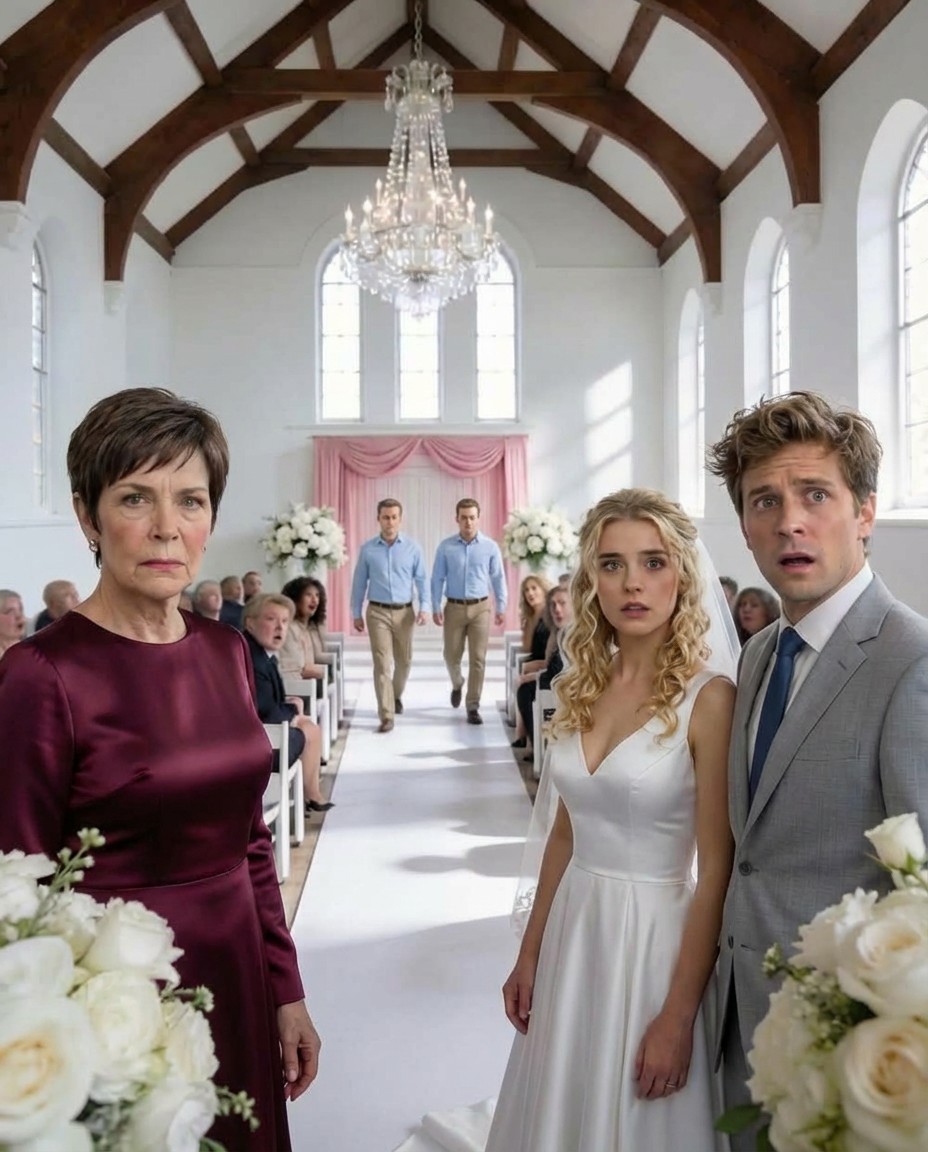
The wedding was everything Vanessa would have wanted. Lavish flowers, soft lighting, champagne flowing freely, music filling the air. It was a celebration built on money Diego believed he had secured.
When he saw me, his face drained of color.
“What are you doing here?” he asked.
“I came to give you a wedding gift,” I replied.
“You don’t have anything left,” he said quickly.
I held his gaze.
“You didn’t take my fortune, Diego,” I said calmly. “You took what I let you see. And that apartment? It doesn’t belong to me personally. You sold something that wasn’t yours.”
The realization hit him slowly, then all at once.
And then the doors opened.
Police officers stepped inside.
The music stopped.
Voices dropped to whispers.
“Diego Villaseñor, you are under arrest for fraud, forgery, and breach of trust.”
Vanessa stepped back immediately.
Diego looked at me, panic breaking through everything else.
“Mom, please—tell them it was a mistake.”
The room waited.
I stepped closer, placed my hands gently on his face, and spoke quietly enough that only he could hear.
“I love you,” I said. “But I will not save you from this. If I do, you will never change.”
They took him away.
The wedding ended in silence.
What followed was not quick or easy. There were charges, hearings, consequences he had never faced before. At first, he blamed me. Then, slowly, something shifted.
Years later, when he walked out of that chapter of his life, he was different.
Humbled.
Grounded.
He began working as a public defender, helping people who had no one else to stand beside them.
One evening, he sat across from me at my table—not asking for money, not asking for control.
Just asking for a second chance.
And this time, I gave it to him.
Because love is not always about protecting someone from the fall.
Sometimes, it is about letting them fall far enough to understand how to stand.
Now, I still live by the sea. My life is quiet again. Protected. Stable.
But when I make coffee in the afternoon and look out at the water, I no longer feel the weight of what happened.
Only something softer.
Because in the end, I didn’t just protect what I built.
I found my son again.