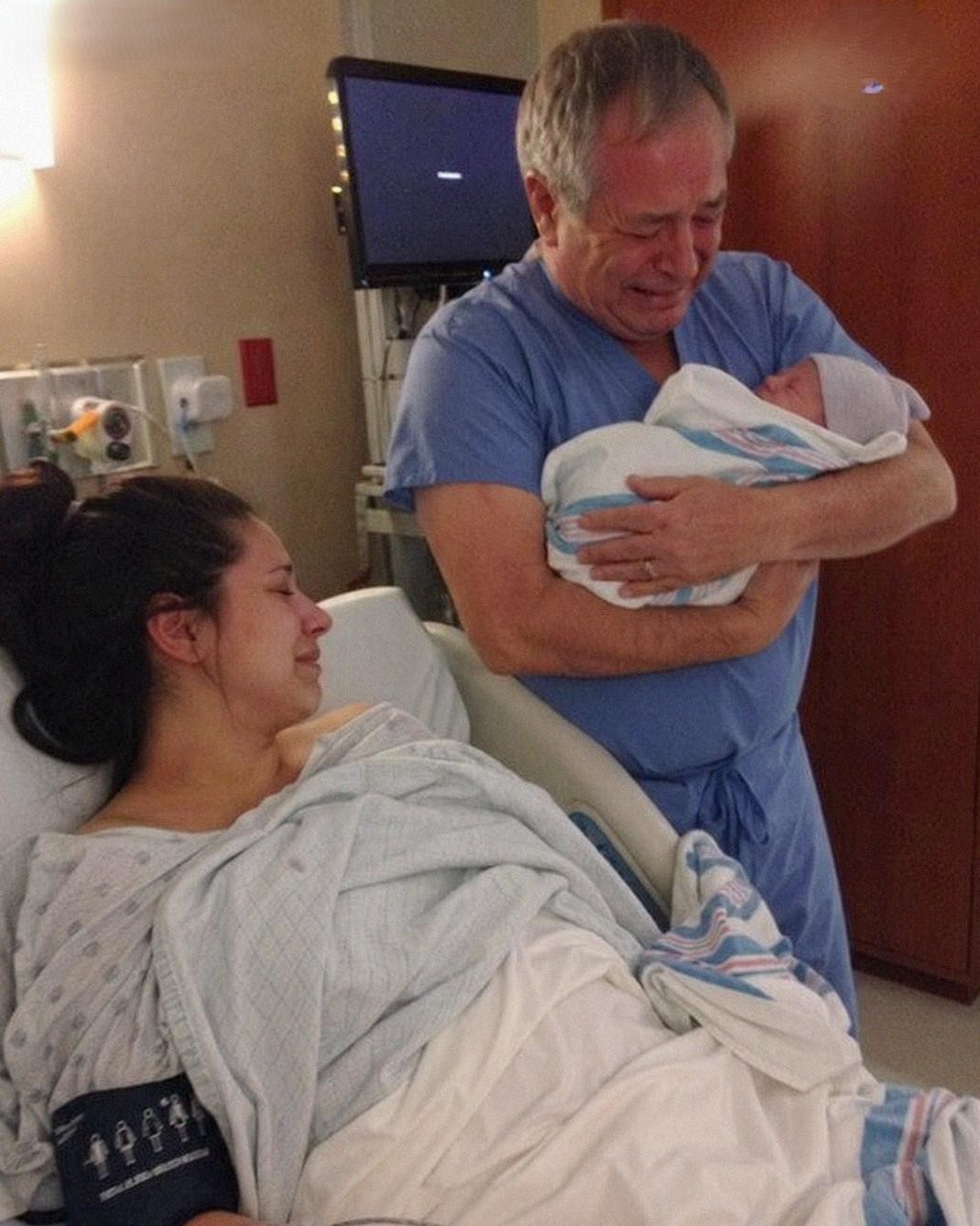
I walked into motherhood believing it would just be me and my son against the world. By the time I left the hospital
I understood how wrong I had been—and how unexpectedly complicated life can become in a single moment.
I had gone through twelve hours of labor alone.
No husband beside me. No family waiting outside. Just the quiet rhythm of hospital machines, a kind nurse named Tina checking in, and the steady thought that everything would change the second I finally held my baby.
When Tina asked if my husband was on his way, I forced a smile.
“He’ll be here soon.”
It was easier than explaining the truth.
Mark had been gone for seven months. He left the night I told him I was pregnant, grabbing his keys and saying he didn’t want to be tied down to “a screaming brat.” He walked out as if nothing we had built mattered, as if I didn’t matter.
Since then, I had learned to survive quietly. I rented a small room behind Mrs. Alvarez’s house, worked double shifts at the diner, stretched every dollar until it barely held together. I bought secondhand baby clothes and skipped meals when rent came due. Whenever anyone asked, I said Mark was busy.
Saying the truth out loud felt heavier than I could carry.
Then, at 3:17 in the afternoon, my son was born.
Noah.
The moment Tina placed him in my arms, everything else—every fear, every unpaid bill, every lonely night—faded. He was warm, real, perfect. For the first time in months, I felt like I could breathe again.
But that peace didn’t last long.
When Dr. Carter came over to check on Noah, his calm expression shifted. His eyes lingered on my baby’s face, then stopped at his eyes—one deep brown, the other a soft gray-blue.
The doctor went still.
“What’s wrong?” I asked, my voice barely steady.
He hesitated, then asked quietly, “Where is the father?”
“He’s not here.”
“What’s his name?”
Something in his tone made my chest tighten. I told him.
Silence followed—and then I saw it. A tear slipping down his cheek.
Before I could ask anything else, the door burst open.
A woman rushed in, still wearing a fast-food uniform, her breath uneven as if she had run the entire way. She looked around frantically until her eyes landed on my son.
“I’m sorry,” she said quickly. “I heard someone mention a baby with two different eye colors. I had to see.”
Dr. Carter froze.
“Lena?” he said.
The room shifted in a way I couldn’t yet understand.
They looked at each other as if something unspoken had just been confirmed. I tightened my grip on the blanket.
“Who is she?” I asked, my voice sharper now.
No one answered right away.
Then Lena stepped closer, her gaze moving slowly over Noah’s face. When she saw his eyes, her expression broke.
“Oh no…” she whispered.
Dr. Carter sank into a chair, rubbing his face. “This can’t be happening again.”
“Again?” I repeated, my voice rising.
Lena looked at me, her expression filled with something between pity and disbelief.
“You’re his girlfriend too… aren’t you?”
For a moment, I couldn’t process the words.
“What?”
Dr. Carter spoke then, his voice heavy. “I delivered Lena’s baby a few months ago. Same father. Same condition—heterochromia.”
My head started shaking before I could stop it. “No. That’s not possible.”
But Lena gave a small, broken laugh.
“He told me I was the only one too.”
The room felt smaller, heavier.
“Mark is my husband,” I said slowly. “How do you have his child?”
Her eyes widened in shock. “Your husband?”
She explained how they had met—how he had come into her workplace often, acting lonely, saying he had no one waiting for him. How things moved quickly. How he disappeared the moment she told him she was pregnant.
Every word felt painfully familiar.
As she spoke, pieces of my own past shifted into place. The times Mark had disappeared. The excuses. The distance. The way he made me feel like I was imagining things.
He hadn’t just left me.
He had built another life—then abandoned that one too.
Dr. Carter looked between us. “When I saw your baby, I recognized it immediately. I should’ve realized sooner.”