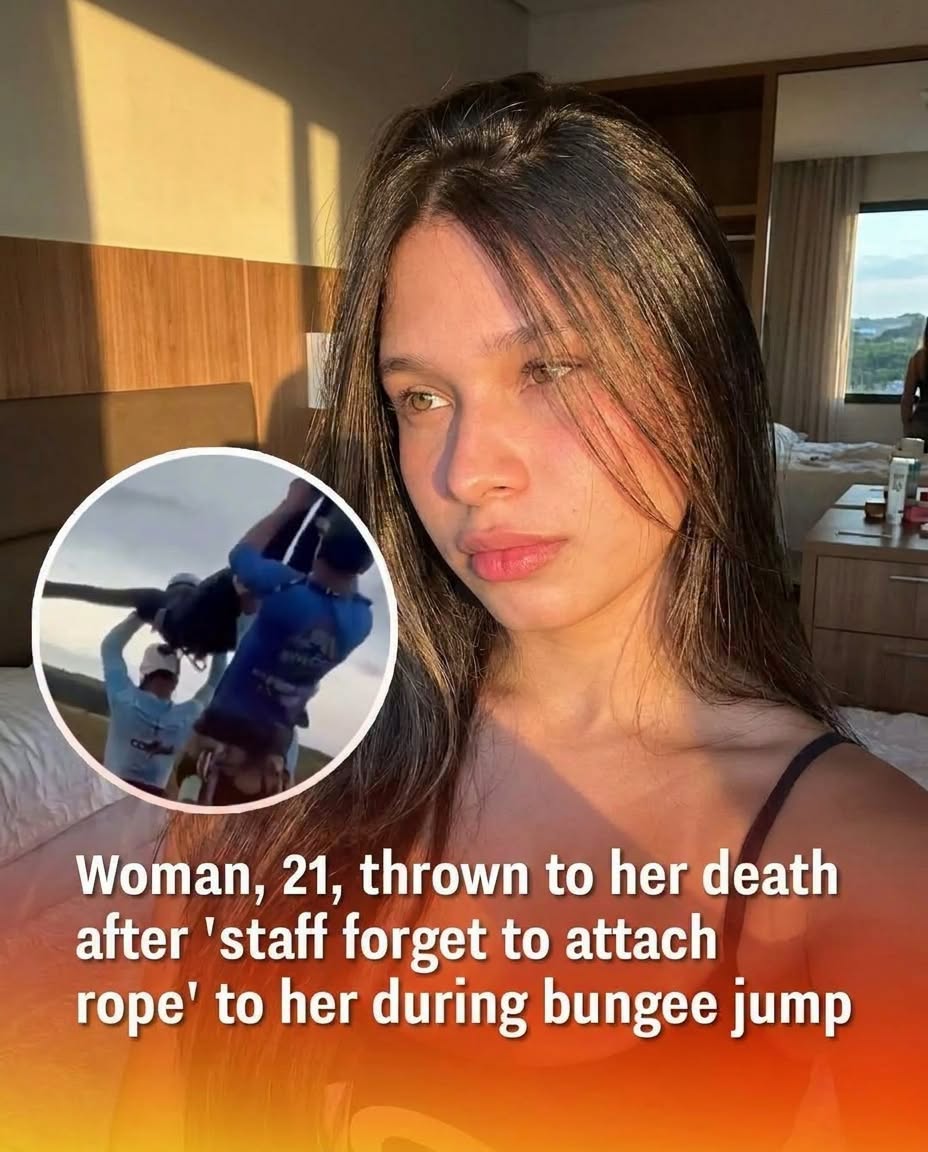
The air was filled with the infectious laughter of a young woman ready to conquer her fears, but in the blink of an eye
the blue sky of Brazil turned into a canvas of unimaginable horror. Maria, a vibrant 21-year-old seeking an adrenaline rush, stood at the precipice of a bridge, fully trusting the professionals she had paid to keep her safe. She took the leap, expecting the exhilarating swing of a rope-jumping adventure—but instead, she plummeted toward a gruesome, preventable death. Why did the people responsible for her life let her step off that ledge without a single safety precaution in place?
What should have been a day defined by joy and high-octane excitement for Maria Eduarda Rodrigues de Freitas was violently dismantled in a matter of seconds. She had arrived at the Ponte do Esqueleto in Limeira, São Paulo, with the wide-eyed enthusiasm of someone ready to embrace the thrill of extreme sports. Her social media updates from that morning, documenting her anticipation and the moments leading up to the jump, now stand as haunting artifacts of a life stolen far too soon. She was not just a thrill-seeker; she was a young woman with a future, a family, and dreams that were extinguished by the staggering incompetence of those who held her life in their hands.
Rope jumping, while similar in spirit to bungee jumping, utilizes a complex system of ropes and harnesses designed to control a participant’s trajectory and swing. It is a technical activity that demands absolute precision, specialized equipment, and, above all, a culture of safety that leaves no room for error. According to witnesses at the scene, that culture of safety was entirely absent. As Maria prepared for her jump, the atmosphere was casual, perhaps dangerously so. When she finally stepped off the platform, the collective realization among those on the bridge was instant and agonizing: the essential safety connection that should have linked her harness to the main rope had been neglected.
The aftermath was a scene of absolute, soul-shattering chaos. The joy that had permeated the atmosphere seconds earlier was replaced by the visceral, blood-curdling screams of onlookers who watched in helplessness as she fell approximately 40 meters to the ground below. There is no way to describe the horror of a situation where the failure to secure a single carabiner or double-check a single knot leads to the loss of a life. Emergency responders, including firefighters and paramedics, rushed to the site with the urgency that such a disaster demands, but their arrival was, tragically, a formality. The impact was fatal.
The investigation that followed has been as swift as the tragedy itself. Authorities were immediately tasked with unraveling a web of incompetence, questioning the organizers and examining every piece of equipment retrieved from the bridge. The central question of the investigation is not just “what went wrong,” but rather “how was this allowed to happen in the first place?” Police and legal experts are meticulously reviewing video evidence, interviewing staff, and scrutinizing the company’s operational records to determine the extent of the negligence. Several individuals connected to the jump have been detained, marking the beginning of a long, painful legal battle for accountability.