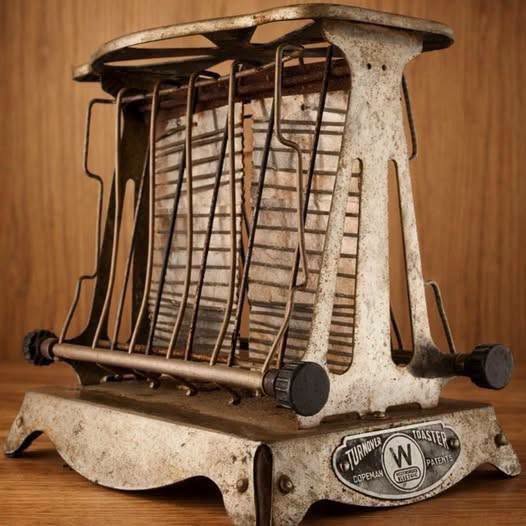
A forgotten metal contraption is haunting the internet. It looks dangerous, exposed, almost experimental — more like
something stolen from a lab than a family kitchen. Thick wires, glowing coils, rotating cages: what on earth did people do with this thing? Commenters argue, historians weigh in, and then one quiet detail finally reveals its true pur
Nearly a century ago, this “mystery machine” sat on countless breakfast tables, humming softly as families hovered nearby. The turnover toaster demanded presence: you watched the coils redden, judged the browning by eye, then flipped the bread by hand at just the right second. It was clumsy, imperfect, and strangely intimate — a small daily ritual that tied new electrical power to ordinary mornings.
Its exposed design now feels almost shocking, a raw display of engineering in an age obsessed with sleek, sealed appliances. Yet that bare metal frame carried enormous promise. It marked the moment when open flames and soot-stained stoves began giving way to clean, predictable electricity.
Today, collectors treasure these toasters as more than curiosities. They are quiet witnesses to how progress first entered the home: not as a revolution, but as a simple, fragile slice of toast.