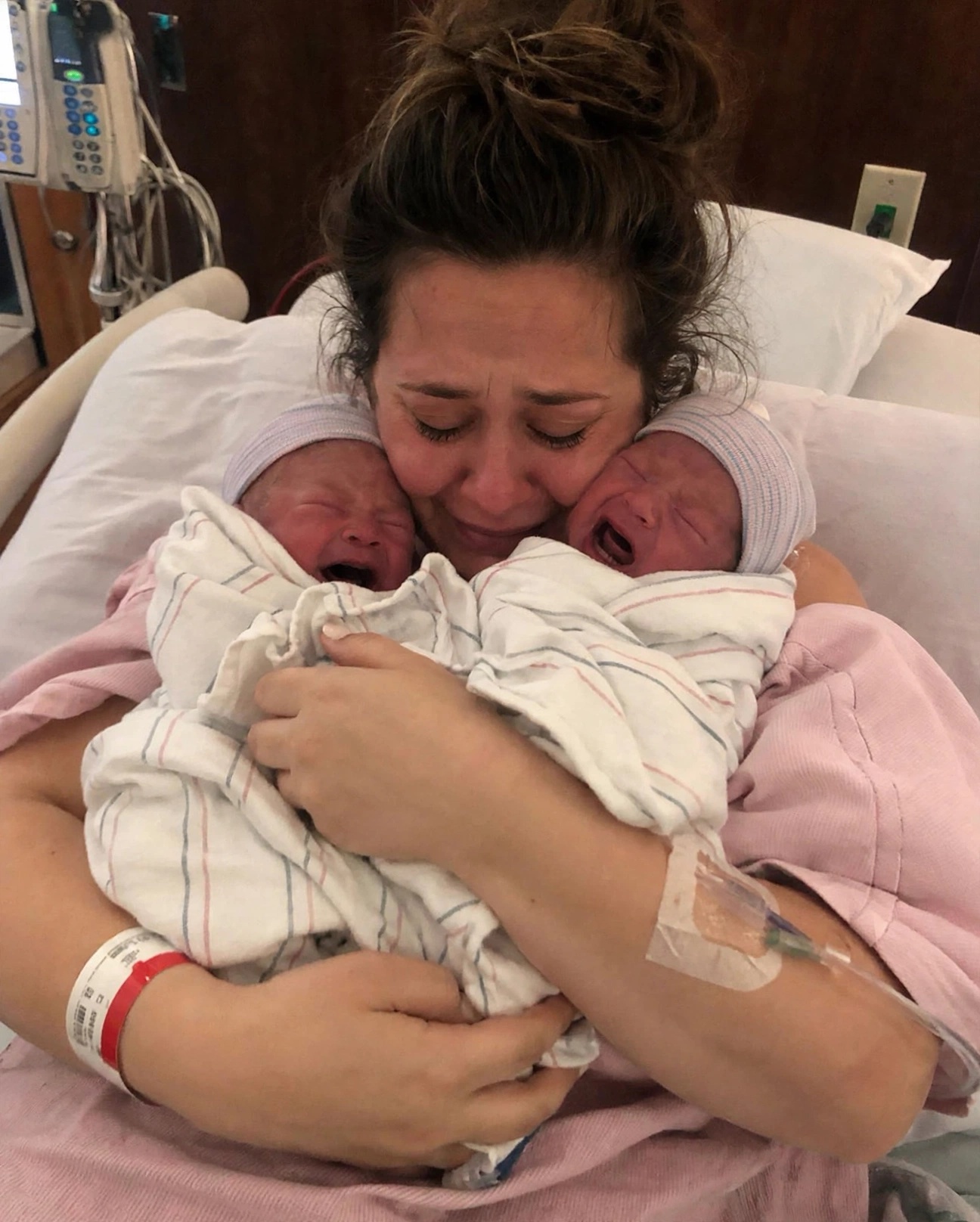
My daughter, Sarah, had spent years dreaming of motherhood, clutching ultrasound photos like holy relics.
When she finally gave birth to twin girls, I expected a celebration, not a nightmare. I arrived at the hospital with two stuffed rabbits, ready to meet my granddaughters, only to be stopped by a social worker with a terrifying ultimatum: Sarah had disclosed a safety concern, and the hospital had called child protection. My daughter wasn’t just a new mom; she was a woman in hiding, and the secret she whispered to me at dawn would tear my entire world apart.
Ryan, Sarah’s husband, had always been a looming presence. In the final weeks of the pregnancy, his “attentiveness” felt less like support and more like a cage. He hovered, he interrupted, and he subtly ensured Sarah had no space to speak for herself. I tried to reach her, to ask if she was truly happy, but Ryan was always there with water, a pill, or a distraction. I blamed my own paranoia, telling myself I was just a nervous mother, but the sterile atmosphere of the hospital ward felt heavy with dread.
When I saw Sarah lying rigid under a thin blanket, her eyes darting toward the overnight bag beside her bed as if it contained a bomb, I knew the “overwhelmed mother” narrative was a lie. Ryan stood by the window, his posture too perfect, his expression too calm. The social worker told me privately that Sarah had requested me as an emergency kinship placement. My daughter wasn’t suffering from postpartum depression; she was fighting for her life and the lives of her children.
That night, my kitchen table became the headquarters for an investigation. I made calls, pleaded with caseworkers, and felt the crushing weight of a system that didn’t know who to trust. At 6:00 a.m., my doorbell rang. Sarah stood on the porch in her hospital scrubs, her coat open to the morning chill. She collapsed into my arms, sobbing. “I didn’t abandon them,” she gasped. “I bought time.”
She revealed that Ryan had a flight booked for four days after her discharge. He had secretly arranged to take the twins out of the country, using a relocation contact through his company to ensure they would never be found. She had hidden an old, untraceable phone in her overnight bag weeks ago, recording his midnight conversations where he spoke of the twins as if they were already his property. In one chilling clip, he told his mother, “If they leave with me first, the rest is paperwork.” He wasn’t just a husband; he was a man planning a kidnapping, and he had been systematically gaslighting Sarah, telling her that if she fought back, he would use her “instability” to have her declared unfit.
The confrontation at the hospital the next day was a masterclass in manipulation. Ryan walked into the caseworker’s office, shoulders relaxed, voice dripping with performative concern. He played the part of the distraught husband perfectly, speaking of Sarah’s “postpartum struggles” and his desperate need to “protect” her. For a moment, the caseworker wavered. Then, Sarah stepped forward and placed her secret phone on the desk.
The silence that followed was suffocating. As Ryan’s own voice filled the room, detailing his cold, calculated plans to erase Sarah from the girls’ lives, his face didn’t change—he didn’t look remorseful; he looked like a predator who had just realized his prey had successfully set a trap. He tried to claim the recordings were private, that Sarah was mentally ill, but the evidence was irrefutable. His employer, having been dragged into his twisted scheme, cut ties immediately, and the overseas assignment vanished.
The legal battle was long and grueling. Ryan was forced into counseling and limited to supervised visits, every interaction tethered to the strict oversight of a parenting app. He no longer held the keys to Sarah’s future.