Some surprising daily habits—like brushing your teeth while washing your face—can increase your risk for breakouts. Discover which hidden skincare mistakes might be sabotaging your skin.
You may feel like you’re doing everything right for your skin, yet stubborn breakouts continue to appear. As it turns out, common daily habits and subtle skincare blunders are often to blame.
1. Using Makeup Wipes
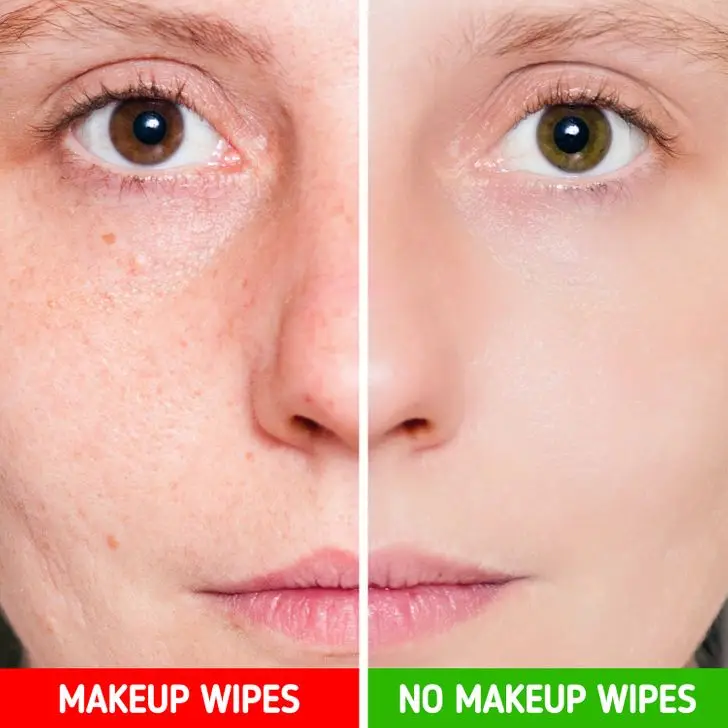
Although makeup wipes themselves are unlikely to cause acne directly, they frequently leave behind dirt, makeup residue, and grime that can lead to clogged pores.
Furthermore, many wipes contain harsh alcohol, synthetic fragrances, and preservatives that strip natural moisture. Physical rubbing can irritate sensitive skin, causing swelling and inflammation that trap bacteria inside pores.
Key Takeaway: Makeup wipes smear residue around rather than cleansing thoroughly—always follow up with a gentle water-based cleanser to remove all traces of makeup.
2. Using the Wrong Sunscreen
While protecting your skin from UV damage is essential, certain sunscreen formulas contain heavy, oil-based chemical filters or pore-clogging emollients that spark flare-ups.
Heavy, comedogenic formulas trap heat and sweat, leading to blackheads and blemishes. Opt for a broad-spectrum, non-comedogenic daytime moisturizer with SPF applied directly to clean skin.
Key Takeaway: Heavy, oil-laden sunscreens easily block pores—choose oil-free, non-comedogenic broad-spectrum SPF options designed specifically for facial use.
3. Not Cleaning Your Glasses
If you frequently develop pimples along the bridge of your nose or upper cheeks, dirty eyeglass frames might be the culprit. Oil, makeup, and skin bacteria accumulate on frame nose pads and temples daily.
Dermatologists recommend wiping down problem areas of your frames once a day. Additionally, if your glasses fit too tightly against your face, constant pressure can push dead skin cells directly into pores.
Key Takeaway: Glasses collect oils and bacteria daily—sanitize your frames regularly and adjust tight fittings to prevent friction-induced breakouts.
4. Washing Your Face Too Much
Cleansing removes impurities, but over-washing destroys your natural moisture barrier. Dermatologists warn that excessive washing strips away essential lipid protection.
Overusing harsh anti-acne cleansers causes rebound oiliness: your skin reacts to extreme dryness by overproducing sebum, which leads to even more frequent acne breakouts.
Key Takeaway: Washing your face more than twice a day strips natural protective oils, triggering excess sebum production and worsening acne.
5. Using Too Many Hair Products
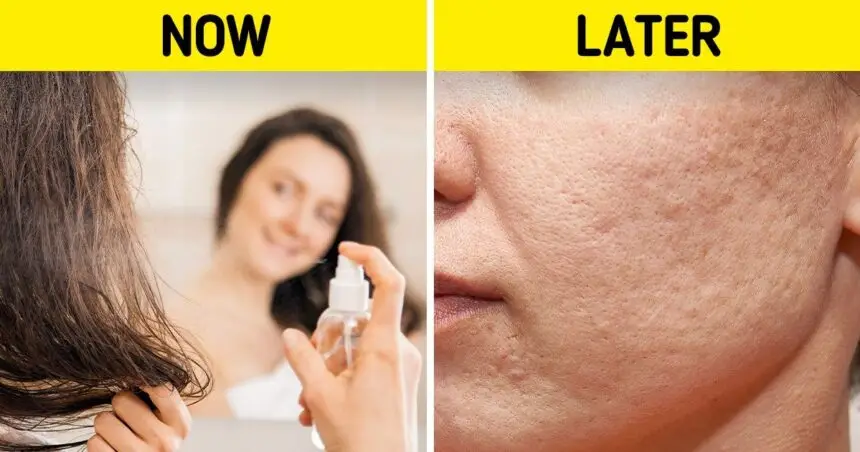
Hair products that smooth frizz or hold styles can inadvertently harm your complexion. Shampoos, heavy conditioners, serums, and hair sprays frequently cause pomade acne along the hairline and forehead.
When hair oils or styling formulas touch facial skin, they clog pores and irritate delicate follicles.
Key Takeaway: Heavy hair pomades and sprays migrate onto forehead skin—keep styling products away from your hairline and shield your face when applying sprays.
6. Washing Your Face in the Shower
Washing your face under a hot shower stream exposes delicate skin to temperatures that are far too extreme. Scalding water damages the skin’s lipid barrier.
Hot water washes away natural protective oils, leaving your skin dry, irritated, and susceptible to inflammatory responses.
Key Takeaway: Hot shower water severely dehydrates skin—wash your face separately at the sink using lukewarm water to keep the protective barrier intact.
7. Not Cleansing After a Workout
Skipping a shower after exercising is a major trigger for post-workout body and face acne.
Perspiration mixed with surface bacteria, makeup, and dead skin cells creates a breeding ground for clogged pores. Cleansing immediately after physical activity removes trapped sweat, oil, and bacteria before inflammation sets in.
Key Takeaway: Allowing sweat to dry on skin traps bacteria inside pores—shower and cleanse immediately after every workout.
 Key Takeaway: Makeup wipes smear residue around rather than cleansing thoroughly—always follow up with a gentle water-based cleanser to remove all traces of makeup.