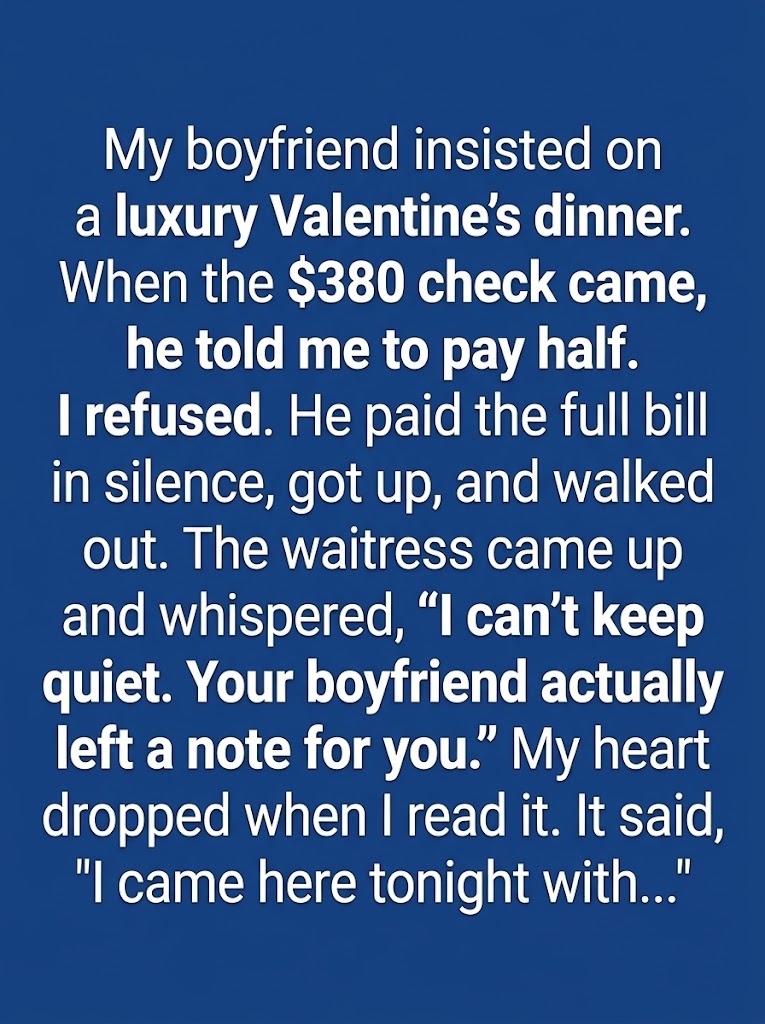
She also recognized the imbalance in his logic. He chose the price, the place, and the timing. Then he treated her reaction to those choices as a measure of her character. Had he asked beforehand whether she was comfortable splitting an expensive Valentine’s dinner, they could have reached an agreement or chosen somewhere else.
The abandoned proposal did not feel like proof of love. It felt like leverage. By revealing afterward that marriage had supposedly depended on her response, he made commitment into a reward he controlled. That raised a painful question about what other hidden tests might appear after a wedding, when the consequences would be harder to escape.
Seven years created real memories and made the decision emotionally difficult, but time invested in a relationship does not obligate anyone to accept manipulation. The dinner showed that the two of them did not merely disagree about a restaurant bill. They had different ideas about trust, communication, and how major decisions should be made.
Money remains one of the most important subjects for couples to discuss. They should talk openly about income, debt, savings, household costs, and what each person considers fair. Those conversations can be uncomfortable, but discomfort handled honestly is healthier than a trap disguised as romance.
The Valentine’s surprise destroyed her expectation of a proposal, yet it also gave her information she needed before marriage. She left knowing that equality cannot be measured by a secret challenge. It has to be built through clear agreements, mutual respect, and the confidence that neither partner is quietly grading the other.
Her refusal to split one bill did not prove that she would never contribute to a household. It showed only that she rejected an unannounced expense chosen by someone else. A genuine proposal would have invited them to plan a future together, including its financial responsibilities. By replacing that conversation with a pass-or-fail trap, he revealed that the larger problem was not $190. It was his willingness to make lifelong commitment depend on rules he had never shared.