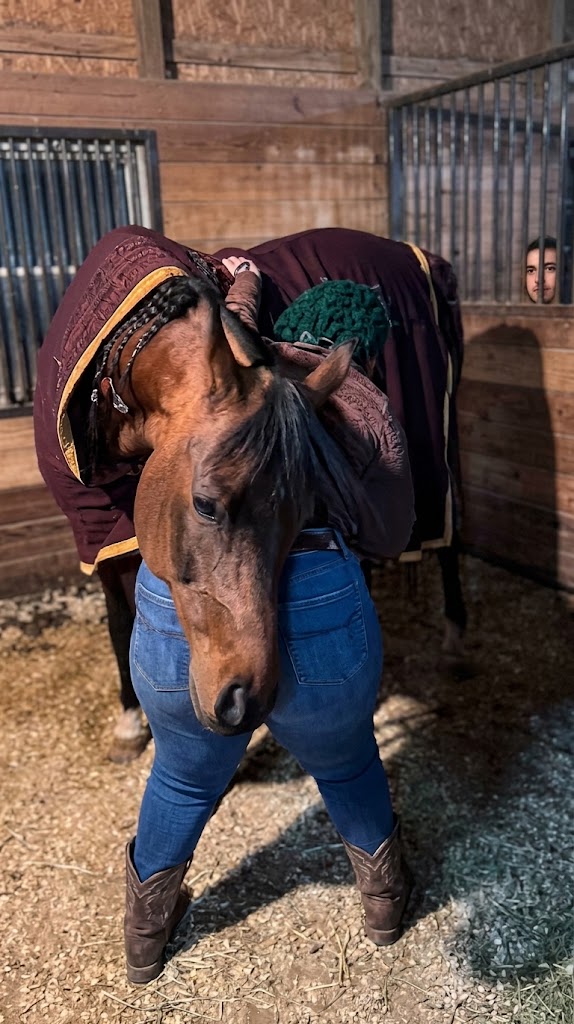
The Facebook photo shows a horse and a person at a stable.
Its caption hints that a young woman was hospitalized. The link opens a first-person story about a frightening encounter and a hospital visit. The story never identifies the scene in the image, names a person in it or gives an account that connects the horse to the hospital. The two pieces of material cannot be read as evidence about one another.
A close look at the photo establishes only what can be seen in the image. There is a horse, a person and a setting that appears to be a stable or enclosure. A caption can invite viewers to infer a cause, but the photo provides no timeline. It says nothing about whether the person in it was later injured or whether any of the events described in the article occurred.
The linked account depends on a different kind of description. The narrator speaks in the first person about being frightened, receiving attention from medical staff and getting support from a friend. The writing is built around the narrator’s feelings. It contains no identifiable hospital record, statement from an involved person or other documentation that would help a reader identify the case.
People often assume a photo is evidence for the sentence above it. On social media the image may have been attached to attract attention, or it may come from a different post. That possibility can be especially important when the implication is embarrassing or alarming for the people shown. Even a clear photograph gives readers no right to assume that the person pictured experienced the event implied by a caption.
The text and image also leave different questions unanswered. In the written story, a reader can follow a person’s account without being able to verify that it is a report of an actual event. In the image, a viewer can describe the scene without knowing the identity or circumstances of the person present. Putting the two together does not fill either gap.
A verifiable article connecting the scene to an incident would tell readers who established that connection and how. It might give the place and date of the photo, or attribute the account to someone who was present and willing to speak about it. That kind of information would give readers a way to distinguish a documented event from an illustration chosen after the fact.
In this case the source gives no foundation for naming anyone, assigning blame or claiming the horse was involved in someone’s hospitalization. The photograph and the hospital story appear alongside one another in the post, but neither supplies the missing details that would establish a relationship between them. The linked account can be read as an anonymous personal narrative. Any claim about the actual people or animal in the image remains unsupported.
The fact that the accompanying article appears on a separate website does not make the photograph evidence. Both items still need an identifiable origin before they can support a claim about an individual.