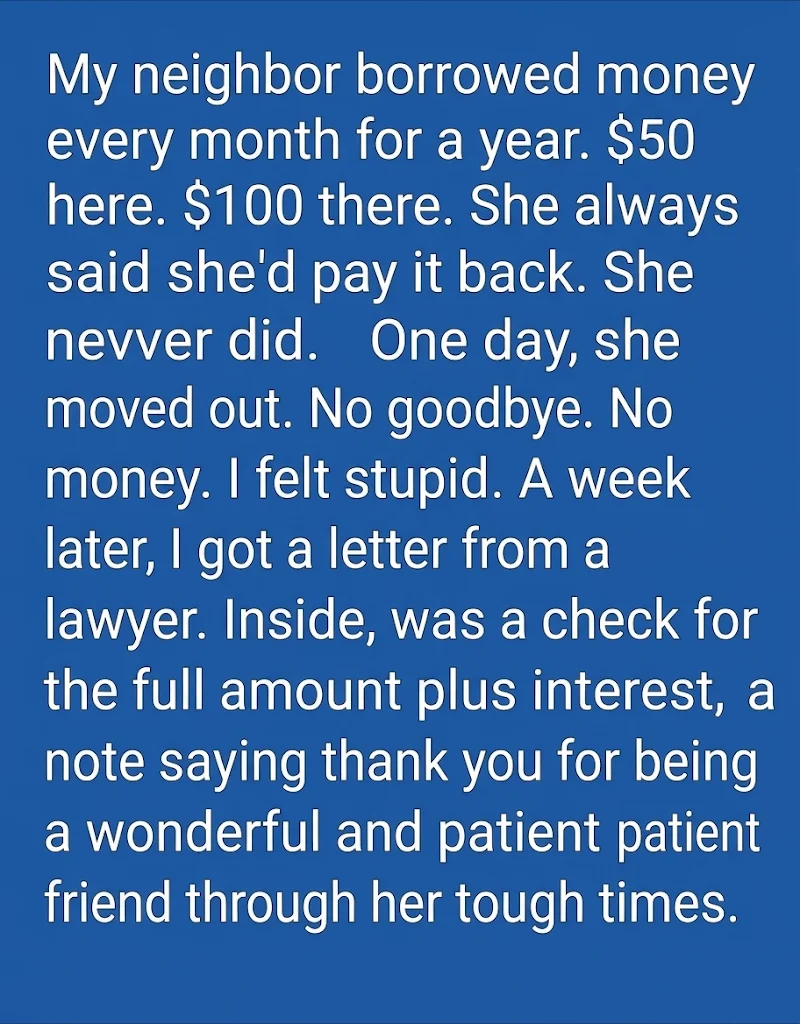
For nearly a year, my neighbor borrowed small amounts, always promising to pay me back.
When she moved away without saying goodbye, I assumed she was avoiding me. A week later, I learned she had died from cancer, an illness she had never mentioned. Her estate documents named me as a beneficiary, but it was the enclosed message that brought me to tears. She thanked me for helping her through difficult days without making her feel ashamed.
The attorney explained the steps needed to settle the inheritance while I struggled with what I had misunderstood. I wished I had offered companionship, a meal, or somewhere to speak openly—not just money. Gradually, the bequest became less about settling an account and more about receiving her gratitude. Her words stayed with me: I had known her requests, but not her suffering. Helping without judgment had mattered more than I ever realized.
At the time, the requests felt small enough to handle one at a time. Sometimes she asked for fifty dollars, sometimes for a hundred. I could understand a neighbor being short of cash for a few days, and every promise to repay me made it easier to set aside the question of when the earlier money would come back. It was only after the requests had become a habit that I began to think about them as a single debt.
Her departure made that debt feel different. As long as I expected to see her again, I could imagine the two of us having a conversation about it. When she moved without saying goodbye, I supplied my own explanation for the silence. I assumed she had decided that leaving was easier than facing me. The letter from the attorney gave me information she had never shared and left me thinking about the confidence with which I had reached that conclusion.